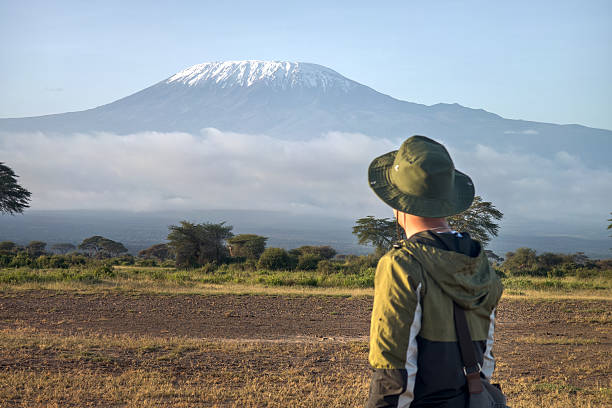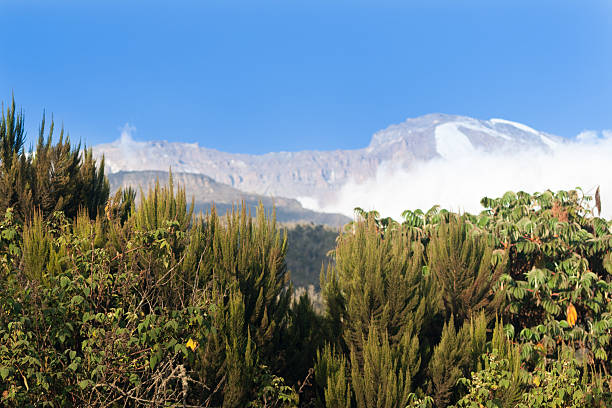

Tanzania Safari Packages
Discover flexible wildlife itineraries across Tanzania's most iconic safari destinations.
Explore Safaris
7 Day Kilimanjaro Group Joining Tour with professional guides, porter support, camping, meals, acclimatization and confirmed Machame, Lemosho or Rongai departures.
A 7 Day Kilimanjaro Group Joining Tour allows compatible confirmed travellers to climb Mount Kilimanjaro together on the same route and departure date while sharing the wider mountain expedition.
Instead of arranging a completely separate private mountain crew for every traveller, climbers join an existing compatible departure and share selected guide, crew and expedition logistics according to the confirmed booking.
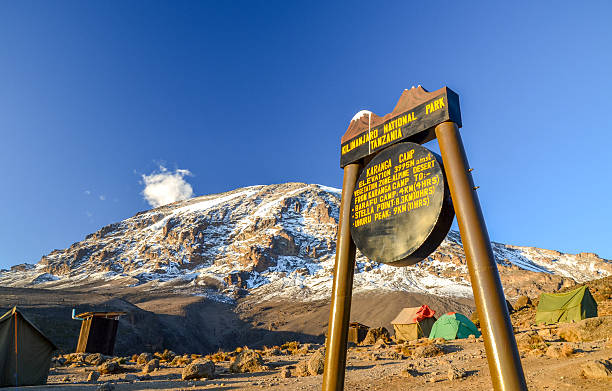
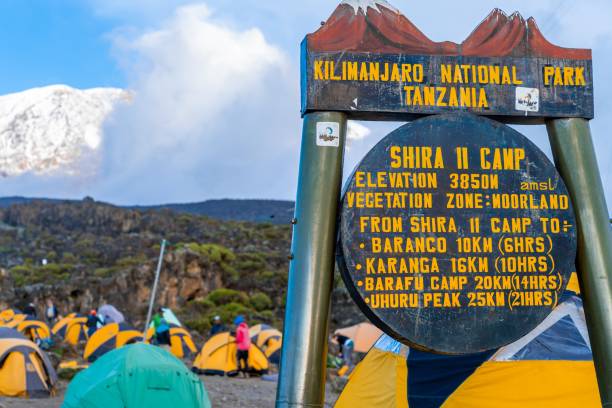
The 7 Day Machame Route is particularly suitable for this format because its seven day structure provides a clear itinerary through Machame, Shira, Lava Tower, Barranco, Karanga, Barafu and Mweka.
Selected Lemosho and Rongai group departures can also be possible when the route, dates, available spaces and itinerary match.
Group joining availability is conditional. It should never be presented as a guaranteed daily departure unless an appropriate confirmed group actually exists.
A Kilimanjaro group joining tour brings compatible travellers together under one confirmed mountain departure.
The participants normally share the route, trekking dates, guide team and selected expedition logistics.
Climbers begin the mountain on the same confirmed route and departure date.
The expedition uses professional guides, cook and porter support sized according to the confirmed group.
Selected group expenses can be distributed among compatible climbers instead of being carried by one private booking.
A climber can join when there is a compatible confirmed departure with available space.
Important booking principle: A traveller asking for a 7 day Machame departure cannot automatically be placed into a Lemosho, Rongai or different duration group. Route, duration and date must match the confirmed departure.
Joining compatible climbers can reduce selected costs compared with organizing an entirely separate private expedition.
Climbers can share the journey with travellers working toward the same Kilimanjaro objective.
The expedition still follows professional guiding, porter support, meals, camp logistics and altitude safety procedures.
| Route | Seven Day Suitability | Group Joining Consideration |
|---|---|---|
| Machame Route | Excellent | Strong seven day structure when a compatible departure exists |
| Lemosho Route | Possible | Joining depends on a confirmed seven day Lemosho group with available space |
| Rongai Route | Strong option | Possible when confirmed northern route departure matches |
| Marangu Route | Different route structure | Must match a specific hut based departure |
| Northern Circuit | Usually better with more days | Requires a matching longer group itinerary |
The seven day Machame Route is a particularly strong choice for a group joining Kilimanjaro tour because the route is naturally structured across seven mountain days.
| Day | Machame Route Section | Main Trekking Focus |
|---|---|---|
| Day 1 | Machame Gate to Machame Camp | Rainforest trekking and introduction to group pacing |
| Day 2 | Machame Camp to Shira Area | Continue into more open terrain and increasing altitude |
| Day 3 | Shira via Lava Tower to Barranco | Higher altitude exposure followed by descent |
| Day 4 | Barranco to Karanga | Barranco Wall and further acclimatization opportunity |
| Day 5 | Karanga to Barafu | Reach summit preparation camp and conserve energy |
| Day 6 | Summit Attempt and Descent | Attempt Uhuru Peak when safe and descend toward Mweka |
| Day 7 | Mweka Area to Mweka Gate | Complete the final mountain descent |
The itinerary divides the mountain into distinct stages that are easy for the group to understand before departure.
Karanga normally remains a separate overnight, providing more recovery before Barafu.
The Lava Tower to Barranco stage provides useful altitude variation before higher mountain stages.
The group begins trekking after completing the required mountain entry procedures.
The first stage passes through Kilimanjaro's rainforest, where conditions can be humid, wet or muddy.
A joining group contains travellers with different fitness levels, trekking backgrounds and natural walking speeds.
The professional guide manages the expedition pace conservatively instead of allowing the fastest climber to determine the speed.
Important: A climber should never feel pressure to walk too quickly simply because another member of the group appears stronger or faster.
The route leaves much of the dense rainforest and enters more open mountain terrain.
As elevation increases, climbers need to pay greater attention to hydration, nutrition and altitude symptoms.
One of the most important realities of a group joining climb is that people can respond very differently to the same altitude.
A climber who appears physically strong may develop significant symptoms while another member of the group adapts differently.
The guide team manages pacing according to the confirmed group and safety requirements.
Climbers should expect natural differences in speed.
The objective is not to make every person walk identically but to manage the expedition responsibly while protecting each individual's health.
The Lava Tower stage is an important part of the seven day Machame acclimatization profile.
The group gains altitude during the day before descending toward Barranco.
Reaching a higher point before descending toward Barranco can support the acclimatization process.
Every group member may respond differently to the same altitude exposure.
The route profile is useful, but it does not guarantee successful adaptation.
The group climbs the Barranco Wall and continues toward Karanga.
The seven day itinerary normally keeps Karanga as a separate overnight stage, creating additional time before Barafu.
Barranco Wall involves steep trekking and scrambling style movement in places but is not normally conventional technical rock climbing.
The group continues toward the high summit preparation camp.
Arrival at Barafu should be about preserving energy rather than proving who can reach camp first.
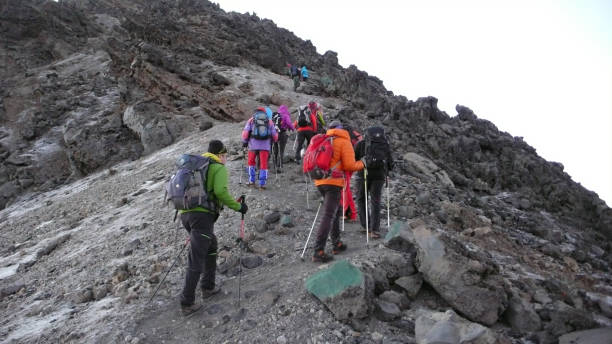
The summit stage can be the most demanding part of the entire expedition.
Climbers may naturally separate according to safe pace and guide arrangements.
Some climbers may feel relatively strong while others develop symptoms requiring closer assessment.
One climber may be required to turn around even if others can safely continue.
The summit attempt begins according to the guide team's plan, climber condition and actual mountain circumstances.
Group status does not require every climber to reach the same point.
Yes, depending on the guide team's safety and operational arrangement.
Kilimanjaro health decisions are individual.
If one climber cannot safely continue, appropriate guide or crew support may accompany that climber downward while others continue according to the mountain team's plan.
No.
Group joining changes the expedition structure, not the physiological realities of high altitude.
Weather, illness, fatigue, altitude response and guide safety decisions can affect every climber differently.
Safety principle: A responsible group joining tour never pressures climbers to continue solely because other members of the group are still ascending.
The final stage descends through progressively greener lower mountain landscapes toward Mweka Gate.
After completing the required exit procedures, transport continues according to the confirmed group package.
A recovery night in Moshi can be useful before safari, Zanzibar or international travel.
| Feature | Group Joining | Private Climb |
|---|---|---|
| Booking Style | Compatible confirmed travellers share the expedition | Dedicated arrangement for one booking party |
| Departure Date | Must match confirmed group | Generally more flexible |
| Route | Must match confirmed group route | Selected for booking party |
| Expedition Costs | Selected shared costs distributed across group | Private party carries its own expedition arrangement |
| Social Experience | Climb with compatible travellers | Only booking party participates |
| Pacing | Managed around group while protecting individuals | Managed around private party while protecting individuals |
| Summit Guarantee | None | None |
Joining can provide a social climbing experience and distribute selected shared expedition costs.
Two travellers may join a compatible group when they prefer shared mountain logistics over a private expedition.
Friends can join an existing departure when route, dates and available group capacity match.
Solo travellers are often well suited to joining because they may not need a completely private mountain expedition.
The traveller still receives professional guide and crew support as part of the group.
Sleeping arrangements, hotel accommodation and tent occupancy should be confirmed separately rather than assuming that group joining automatically requires room sharing.
Not necessarily.
Group joining describes the wider mountain expedition, not automatically sleeping arrangements.
Not automatically.
Hotel room arrangements should follow the confirmed package and booking preference.
A shared mountain departure is different from shared hotel accommodation.
Couples can join a compatible departure while keeping their own accommodation arrangements according to the confirmed package.
Joining can be useful for travellers who want to climb with other people without organizing a completely private expedition.
Friends can join together when sufficient space remains in the confirmed departure.
The wider group may include additional travellers, while the professional guide team manages pacing and safety across all participants.
Group size depends on the confirmed departure.
It should not be presented as one fixed number unless the actual booking has already been confirmed.
The number of guides and support crew should be adjusted according to the number of climbers and operational requirements.
If no compatible confirmed departure exists for the requested route and date, the traveller may need to consider another confirmed date, another route or a private arrangement.
| Feature | 7 Day Machame | 7 Day Lemosho |
|---|---|---|
| Approach | Machame side | Western side |
| Accommodation | Camping | Camping |
| Seven Day Structure | Excellent fit | More compressed than longer Lemosho options |
| Lava Tower | Normally included | Normally included |
| Barranco Wall | Included | Included |
| Joining Availability | Depends on confirmed departure | Depends on confirmed departure |
| Summit Guarantee | None | None |
| Feature | Machame | Rongai |
|---|---|---|
| Approach | Machame side | Northern side |
| Accommodation | Camping | Primarily camping during ascent |
| Lava Tower | Included | Not part of standard route |
| Barranco Wall | Included | Not included |
| Mawenzi Focus | Not a major route feature | Important scenic feature |
| Descent | Mweka side | Normally Marangu side |
| Joining Availability | Conditional | Conditional |
A joining expedition remains a demanding high altitude trek.
Participants walk for multiple days over changing mountain terrain.
Every climber responds individually regardless of how well the rest of the group is performing.
The final ascent combines very high altitude, cold, darkness and accumulated fatigue.
Some first time high altitude trekkers join seven day departures, but beginners should still train seriously.
Joining climbers should expect different fitness levels.
A person who trains more does not automatically acclimatize better, and a slower climber is not automatically less capable of completing the trek safely.
Group mindset: Kilimanjaro should not become a competition. Professional pacing and individual altitude response matter more than walking speed.
The guide team should monitor every climber individually.
A joining climber should never hide symptoms because they are afraid of slowing the group.
Individual health takes priority over keeping the entire party together.
Emergency oxygen can support the mountain safety system where specified in the confirmed arrangements.
It should not be treated as a method for keeping an unsafe climber moving upward simply because the rest of the group is continuing.
When descent is required, lower altitude takes priority.
Not necessarily.
Depending on available guide and crew support, the mountain team may organize an individual descent while other climbers continue.
Actual decisions depend on the specific situation, location and safety requirements.
Group joining does not change Kilimanjaro's unpredictable mountain weather.
Clear views, dry conditions and ideal summit weather cannot be guaranteed.
The practical best time for a joining climber depends on both mountain conditions and the existence of a compatible confirmed departure.
| Factor | Why It Matters | Important Reality |
|---|---|---|
| Departure Availability | Joining requires a compatible group | Not every date has a confirmed departure |
| Rainfall | Influences trail and clothing conditions | Weather cannot be guaranteed |
| Temperature | Upper mountain conditions can become extremely cold | Cold can occur during different climbing periods |
| Cloud | Influences scenery and photography | Clear mountain views cannot be guaranteed |
| Route | The traveller must match the confirmed group route | Different routes cannot simply be combined |
Machame and Lemosho use mountain camping.
Rongai primarily uses camping during its ascent stages.
A suitably warm sleeping bag is important for Kilimanjaro.
Travellers can bring their own appropriate sleeping bag or arrange rental equipment where available.
Exact specifications and availability should be confirmed before departure.
A private portable toilet should only be treated as included when specifically stated in the confirmed package.
Joining a group does not automatically mean the group has a private portable toilet.
Porter numbers depend on the confirmed number of climbers and expedition requirements.
Porters carry group equipment and approved mountain duffels according to confirmed arrangements and applicable rules.
Climbers carry personal daypacks during trekking.
Selected trekking equipment may be available for rental according to confirmed inventory.
Mountain meals are prepared for the confirmed group according to the package.
Dietary requirements should be communicated before the mountain departure.
Being part of a group does not mean dietary needs should be left until the mountain departure day.
Regular hydration remains important for every group member.
Climbers should follow guide advice and maintain suitable fluid intake throughout the itinerary.
Mountain drinking water arrangements should follow the confirmed package and crew procedures.
The number of guides and supporting crew depends on the confirmed number of climbers and route requirements.
A joining group requires enough professional guide support to manage different climber speeds, health conditions and potential descent situations.
Exact crew size should follow the confirmed group and applicable mountain requirements rather than a generic fixed number.
Group joining should never be treated as a reason to overload porters or reduce appropriate crew arrangements.
A responsible expedition should respect porter luggage limits, suitable equipment, food and working conditions.
A briefing before departure gives joining climbers an opportunity to meet, review the itinerary and understand group expectations.
Pre climb accommodation can be included or arranged according to the confirmed package.
Travellers should confirm whether their hotel room is single or shared rather than assuming that joining the mountain group determines hotel occupancy.
A recovery night in Moshi can be useful after completing Kilimanjaro.
Travellers can continue to a Northern Tanzania safari after completing the mountain.
The Kilimanjaro group does not necessarily need to continue together on safari.
Possibly, but safari group joining is a separate availability question.
A confirmed Kilimanjaro joining group does not automatically create a safari joining departure.
Safari route, dates and available vehicle space must also match.
Joining climbers can continue independently to Zanzibar after the mountain.
Ground transport and scheduled domestic flights should be coordinated according to each traveller's confirmed itinerary.
Exact schedules, baggage conditions and departure points should be confirmed for the actual travel dates.
It is a seven day mountain expedition where compatible confirmed travellers share the same Kilimanjaro departure, route and wider expedition arrangements.
No. A joining departure should only be considered available when a compatible confirmed group exists.
The seven day Machame Route is particularly well suited to this duration, while selected Lemosho and Rongai departures can also be possible.
No. Route, duration, confirmed departure date, itinerary and available space must be compatible.
No. The duration and itinerary need to match the confirmed group structure.
No. These are different Kilimanjaro routes with different itinerary structures.
It can reduce selected shared expedition costs, although the final price depends on the confirmed package and group arrangements.
Not automatically. Hotel room arrangements should be confirmed separately.
Not necessarily. Sleeping tent arrangements should follow the confirmed package.
Yes. Solo travellers can join when a compatible confirmed departure has available space.
Yes, when enough space exists in the confirmed departure.
Yes, subject to sufficient available space and matching dates.
Group size varies by confirmed departure and should not be assumed as one fixed number.
Not exactly. Professional guides manage group pacing while recognizing individual differences.
Climbers should follow guide instructions rather than treating the route as a race.
Depending on safety and guide arrangements, an individual climber may descend with appropriate support while others continue.
Not necessarily. The guide team makes decisions according to the specific health and operational situation.
It provides more acclimatization opportunity than a compressed six day Machame itinerary, but successful adaptation cannot be guaranteed.
No. Summit success cannot be guaranteed.
Yes. Physical fitness and altitude adaptation are different.
Tell the professional guide immediately rather than hiding symptoms to avoid affecting the group.
Health monitoring can include symptom discussions, physical observation and pulse or oxygen saturation checks according to the operator's procedures.
Emergency oxygen can support the mountain safety system where specified, but it does not replace descent when descent becomes necessary.
Some first time high altitude trekkers join group departures, but serious training and understanding of altitude risk remain important.
No conventional technical mountaineering experience is normally required, although steep trekking and scrambling style movement occur around Barranco Wall.
Machame is a camping route, so climbers use mountain tents according to the confirmed sleeping arrangements.
Sleeping bag rental may be available according to confirmed inventory.
Selected trekking equipment may be available for rental subject to confirmed availability.
Sleeping mats can be provided according to the confirmed climbing package.
Only when specifically stated in the confirmed package.
Porters carry approved mountain duffels and group equipment according to confirmed arrangements while climbers carry personal daypacks.
Yes. The summit attempt normally includes trekking during darkness.
Normal electrical charging should not be relied upon on camping routes, so a suitable power bank is useful.
Mountain meals can be included according to the confirmed group joining package.
Vegetarian and other dietary requirements can often be arranged when communicated and confirmed before departure.
Mountain drinking water arrangements should follow the confirmed package and crew procedures.
Travellers should arrange suitable insurance and confirm that the policy covers the planned high altitude trekking activity.
Medication decisions should be discussed with an appropriately qualified healthcare professional before travelling.
Yes. A private or compatible group safari can be arranged according to the traveller's confirmed itinerary.
No. Travellers can continue with their own safari, Zanzibar or onward travel plans after the mountain.
A recovery night in Moshi can be useful before beginning a multi day road safari.
Yes. Ground transport and suitable scheduled domestic flights can connect Kilimanjaro with Zanzibar according to the confirmed itinerary.
It may be possible when sufficient travel margin exists, but an extremely tight connection immediately after the mountain can create unnecessary pressure.
A 7 Day Kilimanjaro Group Joining Tour is a strong option for travellers who want to climb with compatible confirmed participants instead of arranging a completely private mountain expedition.
The seven day Machame Route is particularly well suited to group joining because its structure provides clear stages through Machame, Shira, Lava Tower, Barranco, Karanga, Barafu and Mweka.
The separate Karanga stage gives climbers additional acclimatization, recovery and health observation opportunity before the summit preparation camp.
Selected Lemosho and Rongai departures can also be joined when a compatible confirmed group exists.
Joining availability depends on the same route, same duration, matching departure date, available space and compatible operational arrangements.
Group joining does not automatically mean shared hotel rooms or sleeping tents, and these arrangements should be confirmed separately.
Every climber is still monitored individually because altitude response can differ significantly within the same group.
One participant may need to descend while others continue according to the guide team's safety and operational arrangements.
Professional guiding, slow pacing, hydration, nutrition, suitable trekking equipment and honest symptom reporting remain essential throughout the mountain.
Professional guides, assistant guides where required, cook, porter support, mountain accommodation, meals, drinking water arrangements, applicable Kilimanjaro park arrangements and transfers should follow the confirmed package.
Emergency oxygen can support the mountain safety system where specified, but it cannot replace descent when continuing upward becomes unsafe.
Reaching Uhuru Peak cannot be guaranteed because altitude response, health, fatigue, weather and mountain conditions differ between climbers.
The strongest group joining experience therefore combines compatible travellers, professional mountain leadership, responsible acclimatization, realistic pacing and safety focused summit decision making.
Seven Days. Shared Journey. Professional Kilimanjaro Team.
Share your preferred climbing dates, route, number of travellers, equipment requirements, accommodation preferences and onward travel plans and our local mountain team will check for a compatible confirmed seven day Kilimanjaro group departure.
Check 7 Day Group Joining Availability
Discover flexible wildlife itineraries across Tanzania's most iconic safari destinations.
Explore Safaris
Enjoy flexible travel with a dedicated vehicle, professional guide and itinerary built around your interests.
View Private Safaris
Combine Tanzania's wildlife with carefully selected lodges, camps and personalized travel arrangements.
View Luxury SafarisUse this itinerary as a starting point and share your preferred dates, group size, destinations and comfort level. Our team can adjust the trip around your travel plans.
Continue exploring journeys that match this itinerary.