
Tanzania Safari Packages
Discover flexible wildlife itineraries across Tanzania's most iconic safari destinations.
Explore Safaris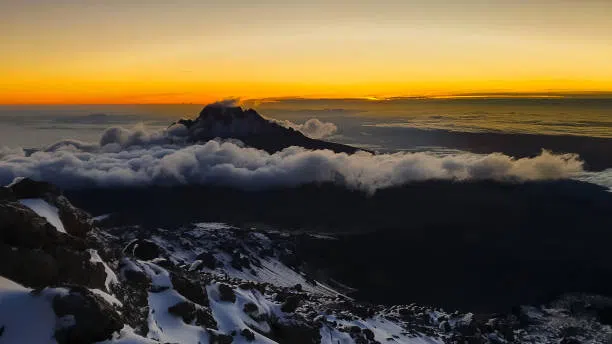
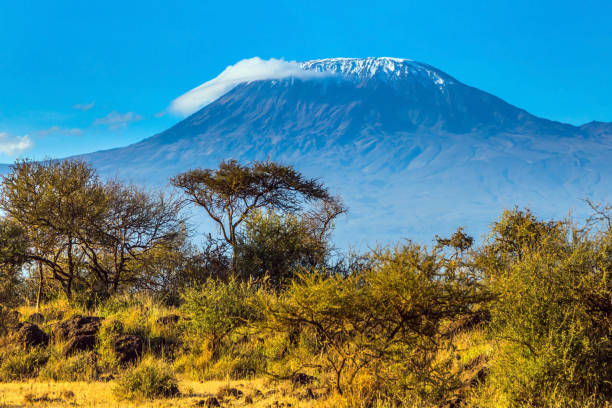
Ultimate 5 Day Mount Kilimanjaro Climb via the classic Marangu Route with professional mountain guides, hut accommodation, rainforest and alpine trekking, meals, transfers and a planned Uhuru Peak summit attempt.
The Ultimate 5 Day Mount Kilimanjaro Climb is a focused summit expedition that combines the classic Marangu Route, professional mountain support, traditional hut accommodation and a planned attempt toward Uhuru Peak.
The itinerary begins in lush rainforest, progresses through heath and moorland toward Horombo, continues through increasingly sparse alpine terrain to Kibo and culminates in the demanding summit stage before the long descent.
Ultimate describes the complete adventure-focused nature of the experience rather than suggesting that five days is objectively the best Kilimanjaro itinerary for every climber.
Begin through Kilimanjaro's lush montane rainforest.
Experience the distinctive hut-based route structure.
Move through increasingly open vegetation as elevation rises.
Progress toward Kilimanjaro's stark high-mountain environment.
Undertake a planned summit attempt subject to conditions and participant wellbeing.
Experience Kilimanjaro from rainforest to the summit zone and back down again.
The five-day Marangu route can be an excellent fit for well-prepared climbers wanting a compact hut-based summit itinerary.
Other travellers may prefer more acclimatization time, camping, different scenery or a longer overall mountain journey.
“Ultimate” therefore refers to the comprehensive adventure experience offered by this itinerary, not a universal ranking above all other Kilimanjaro routes.
Individual acclimatization remains unpredictable.
Conditions can change throughout the expedition.
Summit temperatures can be severe.
Five consecutive mountain days create cumulative physical demand.
Participant condition may require a turnaround.
Professional mountain decisions remain more important than a summit target.
Suitable physically prepared beginners can consider the route with realistic expectations.
Ideal for travellers who prefer huts rather than tented camping.
Book privately or with a compatible departure where available.
Share a focused Kilimanjaro summit journey together.
Complete a genuine five-day mountain challenge as a group.
Bring existing trekking endurance while respecting altitude.
| Traveller Priority | What to Consider |
|---|---|
| More Acclimatization Time | Compare a longer Marangu or another extended Kilimanjaro route |
| Camping Experience | Consider Machame, Lemosho or another camping-based route |
| More Route Variety | Compare routes with different ascent and descent corridors |
| Compact Hut-Based Summit Itinerary | The 5-day Marangu format may fit well |
Morning pickup: Meet your driver and mountain team according to the confirmed Moshi or agreed arrangements.
Transfer: Travel toward the Marangu side of Mount Kilimanjaro.
Mountain procedures: Complete applicable entry and trekking arrangements.
Guide briefing: Review pace, equipment, hydration, weather and the full five-day plan.
Begin trekking: Enter Kilimanjaro's lush montane rainforest.
Forest environment: Walk among large trees, ferns, moss and dense vegetation.
Professional pacing: Begin conservatively rather than using unnecessary energy early.
Possible wildlife: Forest birds or monkeys may appear naturally, although sightings cannot be guaranteed.
Changing weather: Rain, mist and muddy trail conditions can occur.
Rest and hydration: Pause according to the practical mountain schedule.
Continue upward: Progress toward the first mountain hut area.
Evening: Change into dry and warm clothing.
Dinner: Eat according to the confirmed mountain meal plan.
Overnight: Mandara-area mountain hut according to the confirmed itinerary.
Breakfast: Prepare for the second mountain day.
Guide assessment: Discuss energy, sleep quality, weather and participant condition.
Continue uphill: Leave the dense forest environment.
Changing vegetation: Enter increasingly open heath and moorland landscapes.
Possible Kibo views: Higher Kilimanjaro may become visible when weather permits.
Steady pacing: Continue gradually as elevation increases.
Hydration: Maintain appropriate fluid intake.
Meals and rest: Pause according to the mountain schedule.
Continue toward Horombo: Progress to the next hut area.
Evening: Change into warm layers and recover.
Dinner: Eat according to the confirmed package.
Overnight: Horombo-area mountain hut.
Morning: Eat breakfast and prepare for the transition into Kilimanjaro's higher alpine environment.
Guide check: Discuss how each participant feels before gaining additional elevation.
Continue upward: Trek through increasingly sparse vegetation.
Landscape: The terrain becomes more open, dry and exposed.
Kibo: The high mountain may dominate the scenery when cloud conditions allow.
Slow pacing: Deliberate walking becomes especially important.
Altitude awareness: Report headache, nausea, unusual dizziness, weakness or other concerning symptoms promptly.
Hydration and food: Continue according to the practical mountain plan.
Reach Kibo: Arrive at the high-mountain hut environment.
Summit briefing: Review summit timing, clothing, water, snacks and headlamp.
Prepare equipment: Organize all essential summit items before resting.
Overnight/rest: Kibo-area hut accommodation according to the confirmed itinerary.
Summit preparation: Dress in appropriate high-altitude layers and organize essential personal equipment.
Departure: Begin according to the professional guide's planned schedule and actual mountain conditions.
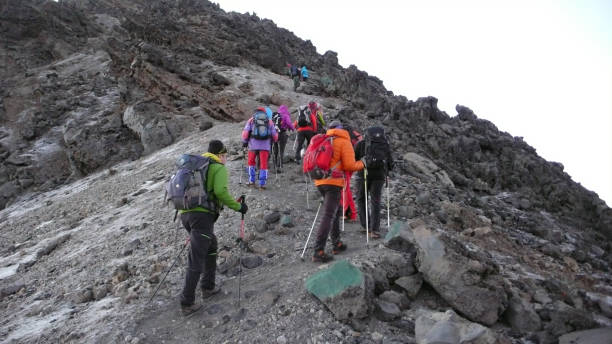
Pre-dawn ascent: Progress slowly through steep, cold and demanding terrain.
Headlamp: Use reliable lighting while the route remains dark.
Professional pacing: Follow a slow, controlled rhythm.
Cold: Prepare for potentially severe high-altitude temperatures.
Altitude: Communicate any change in condition immediately.
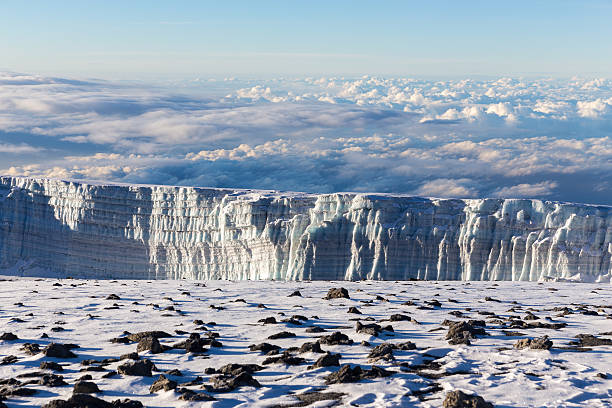
Higher mountain: Continue toward the crater-rim area when conditions and participant wellbeing permit.
Uhuru Peak objective: Continue toward the summit only while the professional guide considers it appropriate.
Summit photographs: If the summit is reached, take photographs when temperature, weather and participant condition allow.
No guarantee: Altitude response, weather, fatigue or responsible mountain decisions may require a turnaround before Uhuru Peak.
Descent: Return carefully toward Kibo.
Recovery: Rest and refuel according to the mountain schedule.
Continue downward: Trek farther toward Horombo.
Overnight: Horombo-area mountain hut according to the confirmed itinerary.
Breakfast: Begin the final mountain day after the confirmed morning meal.
Long descent: Continue toward lower elevations.
Changing landscapes: Watch alpine terrain transition back through moorland and greener vegetation.
Rainforest return: Re-enter Kilimanjaro's lush montane forest.
Trail conditions: Roots, mud and slippery sections may require careful walking.
Trekking poles: Poles can provide useful support on the long descent.
Possible wildlife: Forest birds or monkeys may appear naturally.
Mountain exit: Complete applicable exit procedures.
Meet your vehicle: Continue according to the confirmed transfer arrangements.
Final transfer: Return to Moshi, Arusha or another agreed destination according to the final package.
The climb is not limited to Kilimanjaro's lower mountain.
It progresses from rainforest into the high-altitude Kibo and summit environment.
Uhuru Peak remains the planned objective, but reaching it cannot be guaranteed.
Begin gaining elevation through rainforest.
Move substantially higher toward Horombo.
Progress into the higher alpine environment.
Undertake the demanding summit stage.
Complete a substantial final descent.
There is less mountain time than on longer summit routes.
| Feature | Ultimate 5-Day Marangu | Longer Kilimanjaro Itinerary |
|---|---|---|
| Mountain Duration | Compact five-day schedule | Additional mountain days |
| Accommodation | Huts on Marangu | Depends on selected route |
| Summit Objective | Uhuru Peak | Uhuru Peak on summit itineraries |
| Acclimatization Opportunity | More limited | Generally more mountain time |
| Best Fit | Well-prepared climbers wanting a compact itinerary | Travellers prioritizing additional acclimatization time |
No. Duration should be considered together with acclimatization, fitness and personal priorities.
| Feature | Marangu | Machame |
|---|---|---|
| Accommodation | Mountain huts | Camping |
| Route Style | Traditional hut-based itinerary | Camping-based trekking itinerary |
| Descent | Returns broadly through the Marangu side | Uses a separate main descent route |
| Summit Objective | Uhuru Peak | Uhuru Peak |
| Best Choice | Depends on hut preference, itinerary goals and duration | Depends on camping preference, itinerary goals and duration |
The route uses mountain huts rather than the tented setup of many routes.
The hut system is closely associated with Marangu's classic character.
Expect trekking accommodation rather than hotel comfort.
You still hike through rain, wind and cold.
You still gain significant altitude.
You still face the demanding summit stage.
Hut accommodation should not be confused with a low-difficulty climb.
No. They are practical mountain facilities.
Not automatically.
Private climbing service and hut sleeping privacy are different package features.
Mountain hut facilities may be shared even when the climb itself is private.
Any specific private sleeping arrangement should be confirmed separately.
A suitable warm sleeping bag is normally important for the Marangu Route.
| Challenge | What to Expect |
|---|---|
| Five Consecutive Mountain Days | Significant cumulative physical demand |
| Altitude | One of the main challenges |
| Summit Stage | Long, cold and physically demanding |
| Weather | Rain, wind, cloud and severe high-altitude cold are possible |
| Terrain | Changes from rainforest to exposed alpine environment |
| Descent | Long downhill trekking can be tiring |
| Technical Climbing | Normally not required on the standard route |
Suitable physically prepared first-time climbers can consider the route with professional mountain guidance.
Build steady endurance.
Prepare for sustained ascent.
Useful when natural hills are unavailable.
Prepare for consecutive trekking effort.
Support ascent and long descents.
Become comfortable carrying daily essentials.
Strong hikers can still struggle at elevation.
Headache, nausea, unusual dizziness, weakness, confusion, balance problems or breathing difficulty should be reported promptly.
Do not hide symptoms because you want to reach Uhuru Peak.
Professional mountain decisions should prioritize participant wellbeing above the summit objective.
Save useful energy for later mountain stages.
Use a sustainable rhythm rather than repeated bursts of speed.
Avoid treating higher elevations as a speed challenge.
Reach Kibo with as much useful energy as possible.
Manage the rhythm of the trekking days.
Observe participant condition as elevation increases.
Respond to actual mountain conditions.
Guide climbers through changing terrain.
Determine whether continued ascent remains appropriate.
Keep climbers informed throughout the expedition.
The summit attempt normally begins before daylight.
Participants should expect high altitude, cold, darkness and significant physical effort.
Progress is typically slow and deliberate.
The experience can be extraordinary, but Uhuru Peak remains an objective rather than a guaranteed outcome.
The standard Marangu itinerary is generally a high-altitude trekking route rather than a technical climbing route.
Technical rock-climbing equipment is not normally required for the standard itinerary.
However, proper hiking boots, waterproof layers, warm summit clothing and a reliable headlamp remain important.
Follow the confirmed trekking equipment list for the actual departure.
Keep drinking water accessible during the hiking day.
Keep waterproof layers within easy reach.
Prepare for sudden temperature changes.
Carry familiar personal energy snacks where appropriate.
Carry sunscreen, hat and sunglasses.
Keep necessary items with you rather than inside the porter bag.
Relevant porter support can be included according to the confirmed package, group size and applicable mountain arrangements.
Your main duffel should follow the confirmed porter luggage allowance.
Your daypack remains with you while hiking.
Avoid unnecessary weight and pack only what the mountain itinerary requires.
Lower Kilimanjaro can be wet and muddy.
Keep critical warm clothing dry.
Protect sleeping equipment from moisture.
Protect phones, cameras and power banks.
Yes. They can be especially useful during long descents and slippery lower sections.
Support movement on uneven terrain.
Provide additional stability in wet rainforest.
Help manage sustained downhill walking.
Yes. A reliable headlamp is important for the planned pre-dawn summit stage.
Travellers should not rely on regular mountain charging facilities.
Can be provided according to the confirmed itinerary.
Trail or hut arrangements vary according to the day.
Evening meals can be provided at confirmed overnight locations.
Personal familiar energy snacks can be useful.
Drinking water arrangements can be included according to the confirmed package.
Communicate important requirements before departure.
| Zone | Possible Conditions |
|---|---|
| Rainforest | Rain, humidity, mist and mud |
| Heath & Moorland | Sun, cloud, wind and changing temperatures |
| High Alpine Terrain | Drier, colder and increasingly exposed conditions |
| Kibo | Cold nights and significant temperature variation |
| Summit Stage | Potentially severe cold, wind and reduced visibility |
Strong wind, extreme cold, poor visibility or other mountain conditions can affect practical decisions.
The guide may adjust the plan or require a turnaround.
A comprehensive package can improve preparation and support, but it cannot guarantee favourable summit weather.
Kilimanjaro's lower rainforest supports naturally occurring wildlife.
Wildlife remains free-ranging and sightings cannot be guaranteed.
Capture giant trees, lush vegetation and mist.
Document the distinctive hut-based route experience.
Photograph broadening mountain landscapes.
Capture the high mountain when visibility allows.
Take photographs when conditions and participant wellbeing make it practical.
Photograph Kilimanjaro's ecological zones in reverse.
No.
Reaching Uhuru Peak is not guaranteed.
Clear weather is not guaranteed.
Treat summit photography as a possible reward rather than a promised inclusion.
A private arrangement can provide dedicated professional mountain guidance and private road transportation where confirmed.
Professional support can focus on your own booking.
Walk according to the realistic pace of your party.
Road transportation can be dedicated where confirmed.
Coordinate directly with the professional mountain team.
Other climbers can use the same trail.
Mountain huts and common areas may also be shared.
Private guiding does not create exclusive national park access.
Private hut rooms and private portable toilet arrangements should only be considered included when specifically confirmed.
Solo travellers can request a private climb or compatible group departure where available.
Professional mountain support remains central to the expedition.
You do not need to arrive with your own travel companion to book Kilimanjaro.
Complete the five-day expedition together.
Keep the trekking arrangement within your own party where confirmed.
Suitable families may consider the route depending on participant ages, current requirements, fitness and high-altitude suitability.
Complete a classic summit expedition.
Explore Northern Tanzania's wildlife landscapes.
Finish with beach, ocean and island experiences.
An Arusha pickup can be arranged according to the confirmed transportation package.
Additional road travel time should be considered when planning the first mountain day.
An onward Arusha transfer can be coordinated according to the confirmed package.
This can work well for travellers beginning safari after Kilimanjaro.
An airport transfer may be possible depending on the descent and flight schedule.
Mountain finishing times can vary.
Trail conditions and road traffic can affect timing.
Participants may also be physically tired after five mountain days.
Avoid forcing the final descent around an unnecessarily tight flight.
Kilimanjaro can be climbed during different periods of the year, although conditions vary.
Traditionally clearer periods may provide more opportunities for broad mountain views.
Wetter periods may make the rainforest particularly lush while increasing mud and rain.
High-altitude cold remains possible throughout the year.
No season guarantees successful summiting, perfect weather or clear views.
| Check | Why It Matters |
|---|---|
| Guides & Crew | Understand the professional mountain support included |
| Park Arrangements | Confirm what compulsory mountain requirements are covered |
| Hut Accommodation | Understand mountain sleeping arrangements |
| Meals & Water | Confirm the trekking food and water arrangements |
| Transfers | Check mountain, hotel and airport transportation |
| Equipment | Separate included equipment from rental items |
| Optional Extras | Understand what is available but not automatically included |
Travel insurance is normally a personal responsibility unless explicitly included.
It is a complete five-day Marangu-style Kilimanjaro summit expedition with professional mountain support, hut accommodation and a planned Uhuru Peak attempt.
It describes a comprehensive short-format Kilimanjaro experience rather than a guaranteed number-one route or summit outcome.
No. The best route depends on a traveller's time, fitness, accommodation preference and acclimatization priorities.
The itinerary includes five trekking days.
This five-day summit format follows the classic Marangu Route structure.
Yes. Uhuru Peak is the planned summit objective.
No. Summit success cannot be guaranteed.
Yes. Hut accommodation is one of the route's defining characteristics.
No. They are practical mountain trekking facilities rather than hotels.
No. Private sleeping arrangements should only be considered included when specifically confirmed.
A suitable warm sleeping bag is normally important and should be confirmed as included, rented or personally supplied.
No. Hut accommodation does not remove altitude, fatigue, cold or summit challenges.
Technical mountaineering is not normally required on the standard Marangu Route.
Suitable physically prepared first-time climbers can consider the itinerary with professional guidance.
Yes. Hiking endurance, hills, stairs and consecutive active days can improve preparation.
Yes. It provides less acclimatization time than many longer Kilimanjaro itineraries.
Travellers prioritizing additional acclimatization time should compare longer options before booking.
The trek begins through Kilimanjaro's rainforest toward the Mandara-area overnight.
The route continues through changing vegetation toward Horombo.
Climbers progress through increasingly high alpine terrain toward Kibo.
The planned summit attempt takes place before the descent toward Horombo.
The trek finishes with a long descent through lower mountain zones and the Marangu exit.
Yes. It is typically the most physically demanding stage of the five-day itinerary.
It can be extremely cold compared with lower sections of the mountain.
Yes. A reliable headlamp is important for the pre-dawn summit stage.
Yes. General fitness does not guarantee altitude tolerance.
Tell your professional mountain guide promptly rather than hiding symptoms.
Yes. The guide may require a climber to stop or descend when continuing is considered inappropriate.
Yes. Actual weather can influence summit decisions and visibility.
No. Cloud and changing weather can affect visibility.
Yes. The Marangu Route begins and ends through Kilimanjaro's montane rainforest.
Wildlife may be encountered naturally in lower forest zones, but sightings cannot be guaranteed.
Mountain meals can be included according to the confirmed package.
Drinking water arrangements can be included according to the confirmed itinerary.
Common dietary requirements can normally be considered when communicated in advance.
Porter support can be included according to the confirmed package and luggage arrangements.
You normally carry a daypack containing water, rain gear, warm layers, snacks and personal essentials.
Yes. They can be particularly useful on long descents and slippery trail.
Travellers should not rely on regular mountain charging and should carry suitable backup power.
Yes. Solo travellers can request private or compatible group arrangements.
Yes. Couples can request a private five-day Kilimanjaro climb according to the confirmed package.
Suitable families may consider it after confirming participant ages, current requirements, fitness and altitude suitability.
Yes. A Northern Tanzania safari can be arranged before or after the climb.
Yes. Zanzibar can be added according to your overall Tanzania travel plan.
Yes. Professional mountain guiding, relevant crew support, applicable mountain arrangements, Marangu hut accommodation, meals, drinking water arrangements, transfers and other confirmed services can be coordinated according to the final package.
The Ultimate 5 Day Mount Kilimanjaro Climb brings together rainforest trekking, traditional Marangu hut accommodation, high alpine landscapes, professional mountain support and a planned Uhuru Peak summit attempt within one focused five-day expedition.
The journey begins through Kilimanjaro's lush lower slopes, progresses toward Horombo, continues through increasingly exposed terrain to Kibo and culminates in the challenging summit stage before the long return descent.
Ultimate describes the breadth and adventure of the complete mountain journey rather than claiming the five-day route is objectively superior to all longer or alternative itineraries.
Five days remains a compact acclimatization schedule, so climbers should take altitude, physical preparation, pacing and honest communication seriously.
Hut accommodation provides a distinctive Marangu experience but does not remove rain, cold, fatigue or high-altitude difficulty.
Professional mountain guides can support pacing, route management, participant communication and responsible summit decisions, but they cannot control weather or individual acclimatization.
Uhuru Peak is the planned summit objective, but reaching it can never be guaranteed and participant wellbeing should always remain more important than the summit marker.
Travellers who want more mountain time or additional acclimatization opportunity should compare this five-day climb with longer Marangu or alternative Kilimanjaro routes.
For fit solo travellers, couples, friends and private or group climbers who want a focused hut-based Kilimanjaro expedition with a genuine summit objective, the Ultimate 5 Day Mount Kilimanjaro Climb can provide a powerful Tanzania mountain adventure.
Five Mountain Days. Classic Marangu Adventure. One Uhuru Peak Objective.
Share your preferred climbing dates, number of climbers, hiking experience, fitness level, private or group preference, equipment needs, hotel requirements and wider Tanzania travel plans and our team will prepare your confirmed Ultimate 5 Day Mount Kilimanjaro Climb package.
Plan Your Ultimate 5 Day Mount Kilimanjaro Climb
Discover flexible wildlife itineraries across Tanzania's most iconic safari destinations.
Explore Safaris
Enjoy flexible travel with a dedicated vehicle, professional guide and itinerary built around your interests.
View Private Safaris
Combine Tanzania's wildlife with carefully selected lodges, camps and personalized travel arrangements.
View Luxury SafarisUse this itinerary as a starting point and share your preferred dates, group size, destinations and comfort level. Our team can adjust the trip around your travel plans.
Continue exploring journeys that match this itinerary.