
Tanzania Safari Packages
Discover flexible wildlife itineraries across Tanzania's most iconic safari destinations.
Explore Safaris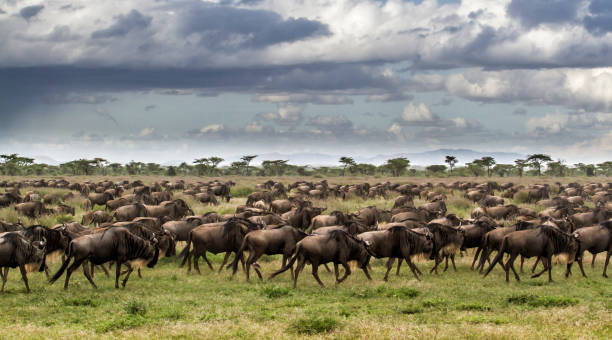
7 Days Serengeti Great Migration Safari from Moshi with wildebeest and zebra herds, lions, cheetahs, Ngorongoro Crater, 4x4 game drives, guide, meals and accommodation.
Looking for a 7 Days Serengeti Great Migration Safari from Moshi? Seven days provide an excellent amount of time for travellers whose main safari priority is the Serengeti and the annual movement of wildebeest and zebras across the wider ecosystem.
The Great Migration should not be understood as one event taking place at one permanent location. The herds move according to rainfall, water, fresh grazing, breeding cycles and natural seasonal behaviour.
This means a good migration safari should be designed around the traveller's dates rather than forcing every guest into exactly the same Serengeti route throughout the year.
A seven-day itinerary creates enough flexibility for several Serengeti game drives, migration-focused searching, predator viewing, wildlife photography and a final Ngorongoro wildlife experience.
The Great Migration is the continuous seasonal movement of large numbers of wildebeest and zebras through the Serengeti ecosystem.
The animals move in response to changing environmental conditions rather than following a timetable designed for safari visitors.
Seven days provide greater migration flexibility than a shorter road safari from Moshi.
Instead of spending only one or two short periods inside Serengeti, the itinerary can provide several days for wildlife searching and photography.
The exact Serengeti area should be selected according to travel dates, seasonal conditions, wildlife priorities, road logistics and accommodation availability.
| Day | Route | Main Experience | Overnight |
|---|---|---|---|
| Day 1 | Moshi → Tarangire / safari area | Elephants, baobabs and first game drive | Karatu / Manyara / suitable area |
| Day 2 | Safari area → Serengeti | Travel and first Serengeti wildlife drive | Serengeti |
| Day 3 | Serengeti | Full-day migration wildlife safari | Serengeti |
| Day 4 | Serengeti | Migration herds, predators and photography | Serengeti |
| Day 5 | Serengeti | Another full migration-focused wildlife day | Serengeti |
| Day 6 | Serengeti → Ngorongoro | Final Serengeti wildlife and highland journey | Ngorongoro / Karatu area |
| Day 7 | Ngorongoro Crater → Moshi | Crater wildlife and return journey | Return to Moshi |
Your professional Travis African Adventures guide meets you at your hotel or agreed pickup location in Moshi.
After loading the safari luggage and completing a short briefing, begin travelling toward the Northern Safari Circuit.
Typical first destination: Tarangire National Park provides an excellent wildlife introduction before travelling toward Serengeti.
Keep accessible: camera, binoculars, sunscreen, sunglasses, sun hat and personal medication.
Although Serengeti is the main focus of this itinerary, Tarangire can add valuable landscape and wildlife diversity.
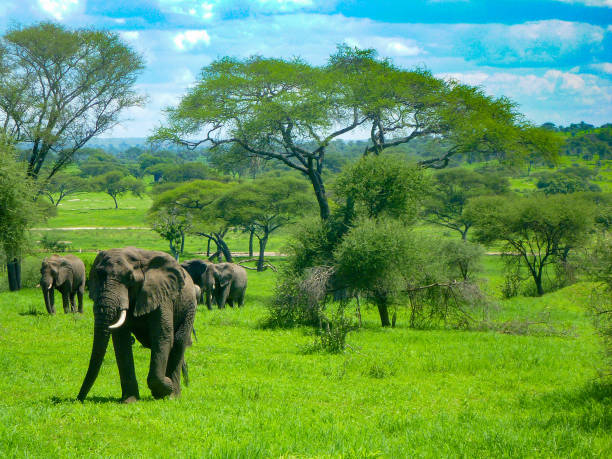
The park is particularly associated with elephants, giant baobab trees, woodland habitats and the Tarangire River ecosystem.
Elephants are among Tarangire's most memorable wildlife attractions.
Depending on natural movement, travellers may see family groups moving through woodland, feeding around baobabs or gathering near suitable water sources.
Enjoy lunch during the safari and continue exploring Tarangire before travelling to the confirmed accommodation.
Stay overnight in a practical location for the following day's journey toward Serengeti.
After breakfast, continue toward Serengeti National Park for the main stage of your seven-day safari.
Important: the selected Serengeti region should reflect your travel dates and realistic seasonal migration movement rather than relying on one fixed route all year.
After completing the required entry arrangements, begin wildlife viewing while continuing toward your Serengeti lodge, tented camp or campsite.
The drive toward accommodation can itself provide excellent wildlife opportunities.
Continue to your confirmed Serengeti accommodation for dinner and overnight.
For a Great Migration safari, accommodation location is important because poor positioning can create unnecessary travel and reduce time around the wildlife areas that matter most.
Day three is dedicated to exploring productive Serengeti habitats and searching for migration-related wildlife according to seasonal conditions.
Your guide's role: adapt the game-drive route to current wildlife activity, road conditions, habitat and the migration region selected for your safari.
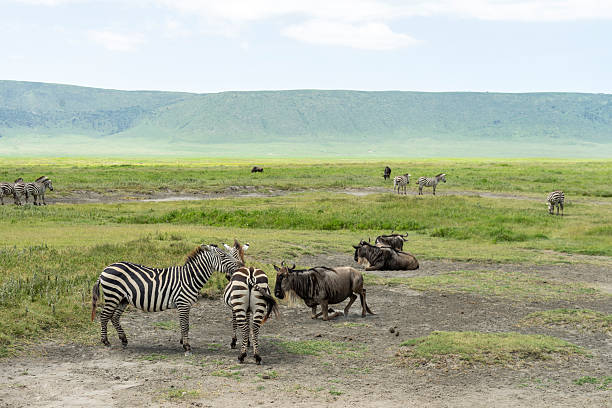
Wildebeest are the species most strongly associated with the Great Migration.
Depending on seasonal conditions, travellers may experience scattered groups, large concentrations or herds moving across broad grasslands.
Zebras are an important part of the migration ecosystem and often move through similar landscapes as wildebeest.
The visual combination of wildebeest and zebras across open plains creates one of the defining wildlife scenes of Serengeti.
Lions are among Serengeti's best-known predators.
They may be found near herbivore concentrations, around kopjes, in grasslands or travelling between territories.
Specific lion sightings and hunting behaviour remain unpredictable.
Cheetahs may be encountered in suitable open habitats where their speed and eyesight provide important hunting advantages.
They often rely on smaller prey such as gazelles rather than focusing only on the largest migration animals.
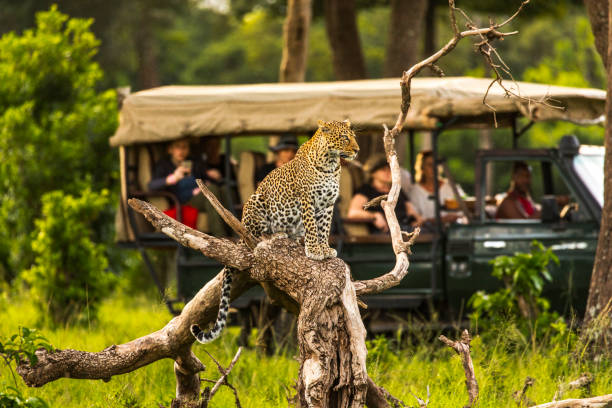
Leopards occur in Serengeti but are secretive, solitary and extremely well camouflaged.
Your guide may scan large trees, woodland and riverine habitats when searching for them.
Day four provides another full day in Serengeti.
This additional wildlife time is one of the main advantages of a seven-day itinerary because herd locations, predator activity and weather can change significantly from one day to another.
A Great Migration safari should not depend on one short game drive.
Wildlife moves naturally, weather changes, predators may become active at different times and the largest herds may not remain in exactly the same location from one day to another.
Several Serengeti days provide much stronger flexibility.
The fifth day provides another major Serengeti wildlife opportunity and can be particularly valuable for travellers whose main priority is the migration.
Best suited to: migration enthusiasts, photographers, repeat safari travellers and anyone who prefers wildlife time over rushing between many parks.
Possibly, when your safari takes place in an appropriate migration region and seasonal period.
However, a river crossing remains one of the least predictable migration events.
Wildebeest may gather near water for hours, move away again, cross unexpectedly or choose another crossing point.
No responsible safari operator can guarantee a river crossing on a specific day.
You can improve the opportunity by: choosing the relevant seasonal region and spending several days there.
You cannot guarantee: the exact crossing time, crossing point, herd size or whether a crossing happens during your stay.
A river crossing is only one dramatic stage of the wider annual migration cycle.
Travellers can have an exceptional Great Migration safari without witnessing a crossing.
During suitable seasonal conditions, large wildebeest concentrations can occur across grasslands associated with the southern part of the wider Serengeti ecosystem.
Young calves and predator activity may provide memorable wildlife experiences.
Exact calving timing and herd location still depend on natural conditions and cannot be guaranteed.
Central Serengeti is an important general wildlife area with resident herbivores and predators throughout the year.
Migration herds can also move through or near central areas during parts of the annual cycle.
For many road safaris, Central Serengeti provides an important wildlife and logistical base.
Northern Serengeti can become important during relevant seasonal movement and is famous for dramatic river environments.
Because northern areas are much farther from Moshi than several other Northern Circuit destinations, road logistics should be planned carefully.
Southern parts of the wider Serengeti ecosystem become important during suitable seasonal stages when the herds use productive grasslands.
A migration-focused itinerary should position accommodation according to realistic seasonal expectations rather than automatically using one permanent camp location.
Western parts of the ecosystem can become important during stages of annual herd movement.
The combination of woodland, riverine habitats and seasonal migration activity creates a different environment from the open plains.
The best migration-focused area changes during the annual cycle.
Your route should consider: travel dates, realistic seasonal movement, accommodation availability, wildlife priorities, road conditions, budget and whether domestic flights are appropriate.
The extended Serengeti time makes seven days an excellent choice for wildlife photographers.
Begin day six with another Serengeti wildlife drive before travelling toward the Ngorongoro region.
This creates one final opportunity to search for animals that may not have appeared during earlier days.
After completing the Serengeti game drive, continue toward the Ngorongoro region.
The transition from open Serengeti landscapes into higher terrain creates another scenic stage of the safari.
Bring a fleece or light jacket: temperatures around the Ngorongoro highlands can be noticeably cooler than on the Serengeti plains.
After breakfast, continue toward Ngorongoro Crater and descend for the final major wildlife game drive of the seven-day safari.
Ngorongoro provides a different resident wildlife environment after several days focused on Serengeti and seasonal migration movement.
Ngorongoro provides an opportunity to search for the endangered black rhinoceros.
Rhinos can remain far from the safari roads, so binoculars are extremely useful.
Ngorongoro provides an opportunity, not a promise, to encounter black rhinoceros.
Recommended: use binoculars, remain patient and be prepared for a distant sighting.
The combination of Serengeti, Ngorongoro and Tarangire provides opportunities to search for the traditional Big Five.
Lions, elephants and buffaloes may occur across several destinations, Serengeti provides leopard opportunities and Ngorongoro provides an opportunity to search for black rhinoceros.
Seeing all five is never guaranteed.
Enjoy lunch at an appropriate designated location during your Ngorongoro safari.
After completing wildlife viewing, ascend from the crater and begin the return journey toward Moshi.
Your seven-day Great Migration safari ends with drop-off at your hotel or another agreed location.
The final day combines Ngorongoro wildlife viewing with road travel toward Moshi.
Recommendation: allow sufficient time before an onward international flight because traffic, road conditions and wildlife-viewing time may influence the return schedule.
| Migration Focus | Possible Experience | Planning Note |
|---|---|---|
| Calving Focus | Large herds, young animals and predators during suitable conditions | Exact timing varies naturally |
| Open-Plains Movement | Moving wildebeest and zebra concentrations | Herd position changes with grazing and rainfall |
| River-Crossing Focus | Possible dramatic river activity during relevant periods | Crossings are unpredictable and never guaranteed |
| General Serengeti Wildlife | Resident predators, elephants, giraffes and herbivores | Rewarding wildlife exists beyond the migration herds |
A road safari provides a classic Northern Tanzania journey and makes it easier to include Tarangire and Ngorongoro.
Domestic flights may be useful for some more distant Serengeti regions when travellers want to reduce transfer time.
| Feature | Road Safari | Fly-In / Fly-Out Safari |
|---|---|---|
| Road Travel | More | Reduced on selected sectors |
| Cost | Generally more value-focused | Generally higher |
| Additional Parks | Easy to combine along the route | Depends on flight structure |
| Best For | Classic safari and value | Time-focused or premium travellers |
A budget migration safari can use camping, simple lodges or affordable tented accommodation.
When controlling costs, the most important priority should remain sufficient Serengeti time and accommodation positioned appropriately for the selected route.
A mid-range safari can use comfortable tented camps and lodges selected according to the relevant wildlife region.
This category provides a strong balance between comfort, location and overall safari cost.
A luxury migration safari can use premium permanent or seasonal safari camps with high levels of service and comfort.
When migration is the main priority, location should be considered just as carefully as luxury level.
| Safari Category | Accommodation | Best For |
|---|---|---|
| Budget | Camping or simple safari accommodation | Value-focused travellers |
| Mid-Range | Comfortable lodge or tented camp | Comfort and wildlife positioning |
| Luxury | Premium permanent or seasonal camp | Premium comfort and service |
A private safari reserves the vehicle and professional guide for your own booking.
This format can be particularly valuable on a Great Migration safari because wildlife interests and photography priorities can be tailored more closely to your party.
Group joining may be available when other travellers have compatible dates, route, Serengeti region and accommodation arrangements.
Because migration itineraries are seasonal, a standard joining route may not match every traveller's preferred migration location.
| Feature | Private Safari | Group Joining Safari |
|---|---|---|
| Vehicle | Reserved for your booking | Shared |
| Wildlife Priorities | More personalized | Balanced among participants |
| Photography | Greater flexibility | Shared preferences |
| Departure | More flexible | Depends on confirmed group |
| Best For | Photographers, couples, families and private groups | Solo and value-focused travellers |
The safari works very well after a Mount Kilimanjaro climb because it can begin from Moshi after the trek.
A recovery night between the mountain and safari can make the transition more comfortable.
Yes. Seven days provide several Serengeti game-drive periods and the flexibility to experience changing light, landscapes and wildlife activity.
Yes. A private migration safari combined with comfortable tented camps can provide an excellent wildlife experience for couples and honeymooners.
The itinerary can also be combined with Zanzibar for a safari-and-beach holiday.
Yes, although families should consider children's ages and comfort with longer road travel.
A private safari normally provides greater flexibility for families than joining a shared vehicle.
The Great Migration is an annual natural cycle rather than a single event limited to one location.
The correct safari area depends on the travel period and the wildlife experience the traveller hopes to prioritize.
| Safari Interest | Possible Experience | Important Note |
|---|---|---|
| Calving | Large herds, young calves and predators during suitable conditions | Exact timing varies naturally |
| Moving Herds | Wildebeest and zebra movement across plains | Locations change with environmental conditions |
| River Crossings | Possible during appropriate stages | Never guaranteed |
| Predators | Lions, cheetahs, hyenas and possible leopard | Specific sightings and hunts remain natural |
| Feature | 6 Days | 7 Days |
|---|---|---|
| Serengeti Time | Excellent | More extensive |
| Migration Flexibility | Strong | Stronger |
| Photography | Excellent | Excellent with additional flexibility |
| Best For | Travellers with slightly less time | Migration-focused travellers wanting more Serengeti time |
Seven days provide an excellent Serengeti-focused safari with enough time for several wildlife drives.
Nine days may be preferable when travellers want to explore a more distant migration region by road, add more parks or simply enjoy a slower pace.
Yes. Seven days provide several Serengeti wildlife periods and good flexibility for a migration-focused itinerary.
Yes. Pickup can be arranged from your hotel or another agreed location in Moshi according to the confirmed safari plan.
It is the seasonal movement of large numbers of wildebeest and zebras through the wider Serengeti ecosystem.
The migration cycle exists naturally, but the exact position, size and behaviour of the herds during your safari cannot be guaranteed.
The most suitable area depends on your travel dates, seasonal conditions, wildlife priorities, accommodation availability and practical routing.
Wildebeest are an important component of the Serengeti ecosystem, although the largest migration concentrations change location naturally.
Zebras are frequently associated with migration herds, although numbers and distribution vary according to season.
Possibly during a relevant seasonal stage, but river crossings are unpredictable and cannot be guaranteed.
Spending several days in the appropriate region improves flexibility, but it still cannot guarantee that a crossing will happen while you are present.
Young calves and calving-related wildlife may be encountered during suitable seasonal conditions, but exact timing cannot be guaranteed.
Serengeti provides excellent opportunities to search for lions, but every wildlife sighting remains natural.
Cheetahs may be encountered in suitable open Serengeti habitats.
Leopards occur in Serengeti but are secretive and may be difficult to locate.
Predator hunts may occur naturally, but they cannot be scheduled or guaranteed.
A seven-day route can include Ngorongoro Crater as the final major wildlife destination before returning to Moshi.
Ngorongoro provides an opportunity to search for black rhinoceros, but sightings may be distant and cannot be guaranteed.
The itinerary provides opportunities to search for several Big Five species, but seeing all five cannot be guaranteed.
Yes. Tarangire can provide an excellent first-day elephant and baobab experience before continuing toward Serengeti.
Yes. Camping and simpler safari accommodation can be used to control costs.
Yes. Comfortable lodges and tented camps can be selected according to route and availability.
Yes. Premium lodges, seasonal camps and suitable domestic flights can be included according to the confirmed package.
Yes. A private 4x4 vehicle and dedicated professional guide can be reserved for your booking.
Group joining may be available when other travellers have compatible dates, route, Serengeti region and accommodation arrangements.
Not necessarily. Group departures depend on compatible confirmed travellers and available vehicle spaces.
Yes. Solo travellers can request an available compatible departure or book privately.
Yes. Couples can choose a private safari or an available compatible group departure.
Yes. A private migration safari with carefully selected tented camps can provide an excellent honeymoon experience.
Yes. Families can book, although children's exact ages and comfort with long drives should be considered when planning.
Yes. Starting from Moshi makes this an excellent wildlife extension after completing a Kilimanjaro trek.
A recovery night in Moshi can make the transition between mountain trekking and safari more comfortable.
Yes. Several Serengeti days provide excellent opportunities for migration, predator and landscape photography.
Yes. Binoculars are strongly recommended for migration herds, predators, birds and distant rhino sightings.
Meals can be included according to the confirmed safari and accommodation package.
Drinking water during the safari can be included according to the confirmed package.
Check the final quotation. Travis African Adventures can arrange applicable park and conservation charges within the confirmed safari package.
Suitable domestic flights may be possible depending on the selected Serengeti region, flight schedule, availability and budget.
Yes. Suitable flights and transfers can be coordinated according to the confirmed safari completion schedule.
Yes. Serengeti region, accommodation category, park combination, road or flight routing and private or group format can be adjusted where operationally practical.
The 7 Days Serengeti Great Migration Safari from Moshi provides multiple opportunities to explore Serengeti while adapting the route to realistic seasonal wildlife movement.
Depending on your travel period, you may encounter large wildebeest and zebra concentrations together with lions, cheetahs, hyenas, elephants, giraffes and opportunities to search for leopard.
Several Serengeti days provide more flexibility for wildlife movement, changing weather, photography and migration searching than a short safari.
River crossings, calving events and predator hunts remain completely natural and cannot be guaranteed, but positioning the safari in the appropriate seasonal region creates a much stronger migration-focused experience.
Ngorongoro can provide a contrasting final game drive with resident wildlife and an opportunity to search for black rhinoceros before returning to Moshi.
For wildlife photographers, Kilimanjaro climbers, couples, honeymooners, families, solo travellers and private groups, seven days provide an excellent balance of Serengeti wildlife time, migration focus and Northern Tanzania safari variety.
Plan Your Trip
Share your travel dates, number of travellers, preferred safari category and migration priorities and our local team will recommend the most suitable Serengeti region, accommodation and road or flight arrangements for your seven-day Great Migration safari.
Start Your Enquiry
Discover flexible wildlife itineraries across Tanzania's most iconic safari destinations.
Explore Safaris
Enjoy flexible travel with a dedicated vehicle, professional guide and itinerary built around your interests.
View Private Safaris
Combine Tanzania's wildlife with carefully selected lodges, camps and personalized travel arrangements.
View Luxury SafarisUse this itinerary as a starting point and share your preferred dates, group size, destinations and comfort level. Our team can adjust the trip around your travel plans.
Continue exploring journeys that match this itinerary.