
Tanzania Safari Packages
Discover flexible wildlife itineraries across Tanzania's most iconic safari destinations.
Explore Safaris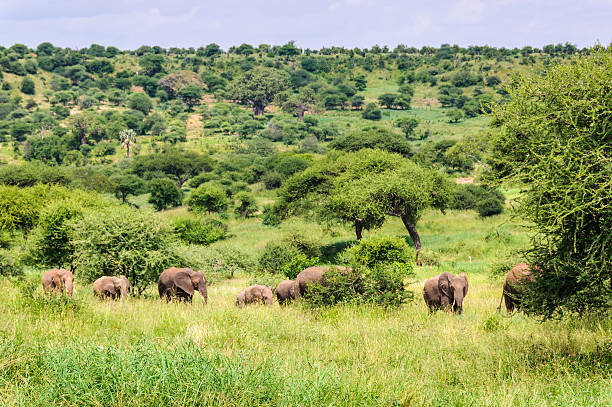
Best Tarangire Safari from Moshi with elephants, giant baobab trees, lions, giraffes, buffaloes, private 4x4 game drives, guide, meals and safari options.
Looking for the Best Tarangire Safari from Moshi? Tarangire National Park is one of the strongest wildlife destinations for travellers staying in Moshi, particularly when elephants, giant baobab trees, classic savanna scenery and practical road access are important.
The best Tarangire safari is not necessarily one fixed itinerary. The right choice depends on your available time, travel season, accommodation preference, wildlife interests and whether you want a private or compatible group-joining safari.
For some travellers, the best option is a dedicated one-day Tarangire safari. Others may prefer a two-day Tarangire and Ngorongoro combination or a longer Northern Circuit safari including Serengeti.
Whatever the itinerary, wildlife remains completely natural, so elephants, lions, leopards, predator activity and other individual sightings cannot be guaranteed.
Tarangire combines a major national park wildlife experience with relatively practical road access from Moshi.
It is especially attractive to travellers who have limited safari time but still want elephants, predators, large herbivores, memorable scenery and professional game drives.
The best safari should balance wildlife-viewing time, road travel, professional guiding, suitable accommodation and your personal priorities.
The most expensive safari is not automatically the best. A well-planned itinerary with realistic timing can often provide a stronger overall experience.
For travellers with only one free safari day, a dedicated Tarangire day trip is one of the strongest choices.
The safari normally starts with an early pickup from Moshi, followed by the road journey to Tarangire, game drives, lunch according to the confirmed package and return toward Moshi.
Yes. A one-day Tarangire safari can provide a rewarding introduction to Northern Tanzania wildlife.
It is especially suitable for travellers who have only one available safari day before or after Kilimanjaro.
Travellers with additional time can expand the itinerary to include Ngorongoro, Lake Manyara or Serengeti.
Two days allow travellers to combine Tarangire with another major Northern Tanzania wildlife destination.
One of the strongest short combinations is Tarangire plus Ngorongoro Crater.
Tarangire contributes elephants and baobab landscapes, while Ngorongoro adds concentrated crater wildlife and a possible black rhinoceros opportunity.
Another excellent short safari combines Tarangire with Lake Manyara National Park.
Tarangire offers savanna, elephants and baobabs, while Lake Manyara adds forest habitats, primates, birdlife and Rift Valley scenery.
A three-day safari can combine three contrasting Northern Tanzania destinations.
Four days make it possible to introduce Serengeti while still including Tarangire and Ngorongoro.
The itinerary becomes more travel-intensive once Serengeti is added, so careful route planning is important.
Five or more days generally provide a stronger balance when Tarangire, Serengeti and Ngorongoro are all included.
Additional time reduces itinerary pressure and provides more meaningful wildlife-viewing periods in Serengeti.
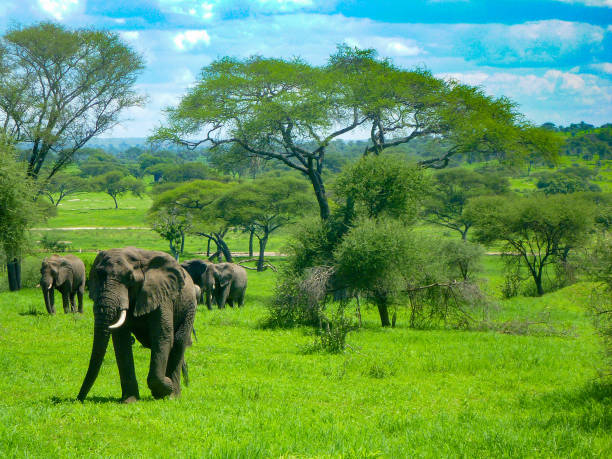
Tarangire is one of the strongest Northern Tanzania destinations for travellers whose main wildlife interest is elephants.
Visitors may encounter family groups feeding, travelling through woodland, crossing open areas or using water sources depending on current conditions.
Exact elephant numbers and locations vary naturally from day to day and season to season.
No.
Tarangire provides excellent elephant opportunities, but wildlife moves freely through a natural ecosystem.
Rainfall, water availability, fresh grazing and other ecological factors influence exact wildlife distribution.
Tarangire's giant baobab trees are among the park's most recognizable natural features.
Their massive trunks and unusual shapes create outstanding photographic backgrounds for elephants, giraffes and other wildlife.
The Tarangire River is an important ecological feature within the park.
During drier seasonal conditions, reliable water can become particularly important and may influence where elephants and other animals spend time.
Exact wildlife concentrations vary according to current rainfall and ecosystem conditions.
Lions occur in Tarangire and may be encountered during game drives.
A professional guide can search suitable habitats and areas where wildlife activity is occurring.
However, lion sightings, close encounters, hunts and kills remain natural and cannot be guaranteed.
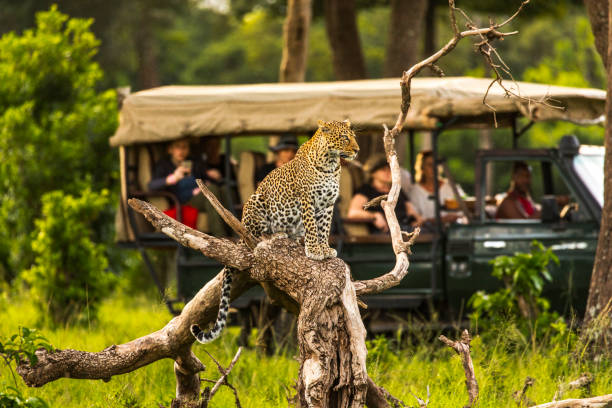
Leopards occur in Tarangire but can be difficult to locate because they are secretive and highly camouflaged.
A leopard encounter should therefore be treated as a possible highlight rather than a standard expectation.
Cheetahs may occur in suitable open habitats within the wider ecosystem.
Travellers whose highest priority is cheetah viewing may benefit from adding Serengeti to a longer itinerary.
Giraffes may be encountered throughout suitable woodland and savanna environments.
They are especially photogenic when seen among acacia trees or giant baobabs.
African buffaloes occur within the Tarangire ecosystem and may be encountered during game drives.
Seasonal water and grazing conditions influence their distribution.
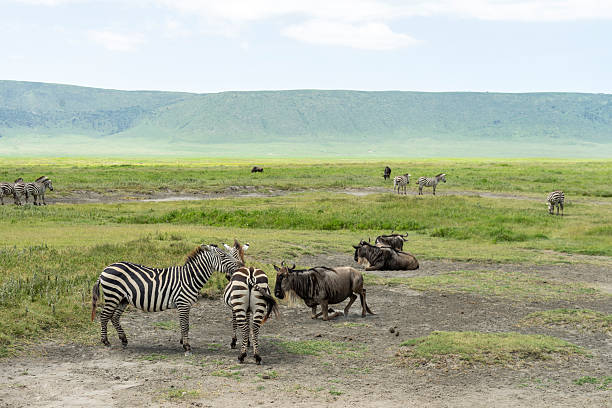
Zebras and wildebeest can be found within the broader Tarangire ecosystem.
Their local concentrations change according to rainfall, fresh grazing and water availability.
Black rhinoceros should not be considered a normal Tarangire safari expectation.
Travellers interested in a black rhino opportunity can add Ngorongoro Crater to a two-day or longer itinerary.
Tarangire provides opportunities for some traditional Big Five species, particularly elephants, buffaloes and lions.
It should not be promoted as a guaranteed Big Five destination.
A wider safari combining Tarangire, Ngorongoro and Serengeti provides broader opportunities, but seeing all five species cannot be guaranteed.
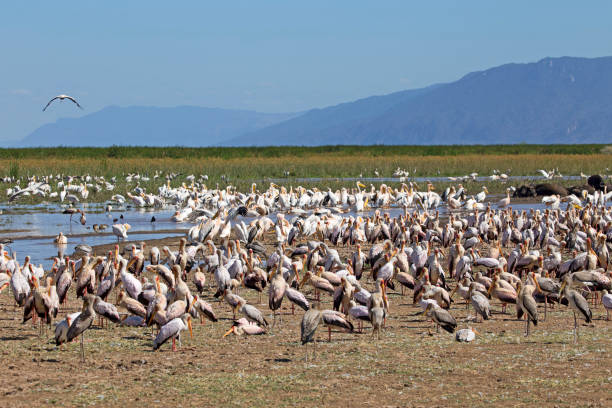
Tarangire is an excellent destination for birdwatchers because of its varied habitats.
Tarangire can provide rewarding wildlife experiences throughout the year.
Drier periods are famous for wildlife activity around reliable water, while greener periods offer lush scenery, dramatic skies and excellent birdwatching.
| Safari Interest | Possible Experience | Planning Note |
|---|---|---|
| General Wildlife | Drier conditions can be especially rewarding | Wildlife distribution varies naturally |
| Green Landscapes | Green season | Wildlife may be more dispersed |
| Elephants | Strong opportunities under suitable conditions | Exact concentrations vary |
| Birdwatching | Excellent in different seasons | Bird activity changes seasonally |
| Photography | Strong in both dry and green conditions | Landscape character changes seasonally |
Drier conditions are particularly popular because animals may depend more heavily on reliable water.
Vegetation can also become less dense in some areas, potentially improving wildlife visibility.
Green-season Tarangire offers fresh vegetation, dramatic skies and a different photographic character.
Wildlife may be more widely distributed when water and grazing are available across a broader area.
No. Rain does not automatically ruin a safari.
Rain can influence roads, vegetation and wildlife distribution, but it can also produce fresh landscapes and attractive photographic conditions.
A private safari is generally the strongest choice for travellers who prioritize flexibility.
The safari vehicle and professional guide are reserved for your travelling party.
Group joining can be useful for travellers who want to share some vehicle and guide costs.
Joining is only available when confirmed compatible travellers have matching safari dates, routes and available vehicle space.
Group-joining Tarangire safaris should not be assumed to depart every day.
No.
Group joining normally refers to sharing the safari vehicle and professional guide.
Room occupancy and accommodation arrangements are confirmed separately.
| Feature | Private Safari | Group Joining Safari |
|---|---|---|
| Vehicle | Reserved for your party | Shared with confirmed travellers |
| Guide | Dedicated to your booking | Shared by participants |
| Departure Flexibility | Greater | Depends on confirmed departure |
| Photography | More personalized | Shared priorities |
| Shared Costs | Private vehicle costs carried by booking party | Some vehicle costs shared |
A good budget safari should reduce unnecessary luxury costs without compromising professional guiding, vehicle quality, park access or meaningful game-drive time.
A mid-range safari usually provides an excellent balance between comfort and value.
Travellers can combine professional wildlife guiding with comfortable lodge or tented accommodation on overnight itineraries.
A luxury Tarangire safari can combine private transportation, premium accommodation and personalized service.
Luxury improves comfort and privacy but does not guarantee more wildlife or closer encounters.
| Safari Level | Typical Style | Best For |
|---|---|---|
| Budget | Simple lodge, camping where practical or compatible joining | Value-focused travellers |
| Mid-Range | Comfortable lodge or tented accommodation | Comfort and value |
| Luxury | Premium safari lodge or camp | Premium comfort and service |
Tarangire is one of the most practical wildlife extensions after climbing Mount Kilimanjaro.
Travellers with one free day can visit Tarangire alone, while those with additional time can continue to Ngorongoro, Lake Manyara or Serengeti.
Tarangire is highly suitable for many family safaris because elephants, giraffes, zebras and other large wildlife are easy for children to recognize.
A private safari vehicle usually provides the best flexibility for family pacing.
A private safari can provide couples with additional privacy and greater flexibility.
Tarangire can also be incorporated into a honeymoon itinerary combining Ngorongoro, Serengeti and Zanzibar.
Solo travellers can reserve a private safari or request an available compatible group-joining departure.
Flexible travel dates may improve the chance of matching an existing confirmed safari group.
A private safari is normally the strongest option for dedicated photographers because the vehicle does not need to balance unrelated travellers' wildlife priorities.
Binoculars can improve both wildlife viewing and birdwatching.
The best option depends on your available time and wildlife priorities. One day is excellent for Tarangire alone, while two or more days allow stronger combinations with Ngorongoro, Lake Manyara or Serengeti.
Yes. Tarangire is one of the most practical major wildlife day trips from Moshi.
Tarangire is particularly famous for African elephants, giant baobab trees, savanna scenery and birdlife.
Tarangire provides excellent elephant opportunities, but no wildlife sighting can be guaranteed.
Lions occur in Tarangire and may be encountered, but their locations and activity remain unpredictable.
Leopards occur in Tarangire but are secretive and difficult to predict.
Yes. Giraffes may be encountered in suitable woodland and savanna habitats.
African buffaloes may be encountered according to their natural distribution.
Yes. Both occur within the Tarangire ecosystem, with local concentrations changing seasonally.
Black rhinoceros is not a standard Tarangire expectation. Ngorongoro Crater is a stronger addition for a black rhino opportunity.
Tarangire offers opportunities for some Big Five species but should not be considered a guaranteed Big Five destination.
Drier conditions are especially popular for wildlife around reliable water, while greener periods provide lush landscapes, birdlife and excellent photography.
Yes. Green-season Tarangire can provide lush landscapes, excellent birdwatching and dramatic skies.
Private safari is usually better when flexibility, photography, family pacing or privacy is a major priority.
Group joining may be available when compatible confirmed travellers have matching dates and routes.
Not necessarily. Group joining depends on confirmed compatible travellers and vehicle availability.
Tarangire and Ngorongoro form one of the strongest two-day combinations because they provide contrasting landscapes and wildlife opportunities.
Tarangire, Ngorongoro and Lake Manyara create a compact three-day Northern Tanzania safari with varied habitats.
Yes. Serengeti is best included on a multi-day safari with enough time for meaningful wildlife viewing.
Yes. Tarangire is one of the most practical major safari extensions from Moshi after climbing Kilimanjaro.
A recovery night in Moshi can be useful before beginning the safari when your schedule allows.
Yes. Elephants, giraffes, zebras and memorable scenery make Tarangire suitable for many family safaris.
Yes. Solo travellers can book privately or request an available compatible group safari.
Yes. Private Tarangire safaris can be combined with Ngorongoro, Serengeti and Zanzibar.
Yes. Elephants, giant baobabs, giraffes, predators, birds and seasonal scenery provide excellent photographic opportunities.
Yes. Binoculars are useful for predators, birds and wildlife positioned farther from safari roads.
Yes. Budget safaris can use efficient routing, simple accommodation and compatible group joining when available.
Yes. Comfortable lodge or tented accommodation can be included according to the confirmed itinerary and availability.
Yes. Premium accommodation and private safari arrangements can be included according to availability.
Meals can be included according to the confirmed safari package.
Drinking water can be included during safari according to the confirmed package.
Check the final quotation. Applicable Tarangire National Park arrangements can be included according to the confirmed safari package.
Pickup can be arranged from your confirmed Moshi accommodation or another agreed location.
Yes. Suitable road and domestic flight arrangements can connect the safari with Zanzibar according to the confirmed itinerary.
Yes. Duration, private or group format, additional parks, accommodation level, pickup and final drop-off can be customized where operationally practical.
For travellers with only one free day, a dedicated Tarangire safari from Moshi is one of the strongest choices because it provides elephants, baobabs and classic Northern Tanzania wildlife without the extended road travel required for Serengeti.
For two days, Tarangire and Ngorongoro create an excellent combination of elephant landscapes and concentrated crater wildlife.
For three days, Tarangire, Ngorongoro and Lake Manyara provide varied ecosystems, while four to five or more days allow Serengeti to become part of the itinerary.
Private safari is generally strongest for flexibility, families, couples and photographers, while group joining can suit travellers who want to share some vehicle costs when compatible confirmed departures exist.
Tarangire can be rewarding throughout the year, with drier periods often emphasizing wildlife around reliable water and greener periods offering lush scenery and excellent birdwatching.
Elephants, lions, leopards, predator activity and all other wildlife remain natural, so a well-designed Tarangire safari should always combine strong planning with realistic wildlife expectations rather than guaranteed sightings.
Plan Your Tanzania Safari
Share your travel date, number of travellers, available safari days, preferred accommodation level and whether you want a private or available group-joining safari and our local team will prepare the most suitable Tarangire safari from Moshi.
Plan Your Best Tarangire Safari
Discover flexible wildlife itineraries across Tanzania's most iconic safari destinations.
Explore Safaris
Enjoy flexible travel with a dedicated vehicle, professional guide and itinerary built around your interests.
View Private Safaris
Combine Tanzania's wildlife with carefully selected lodges, camps and personalized travel arrangements.
View Luxury SafarisUse this itinerary as a starting point and share your preferred dates, group size, destinations and comfort level. Our team can adjust the trip around your travel plans.
Continue exploring journeys that match this itinerary.