
Tanzania Safari Packages
Discover flexible wildlife itineraries across Tanzania's most iconic safari destinations.
Explore Safaris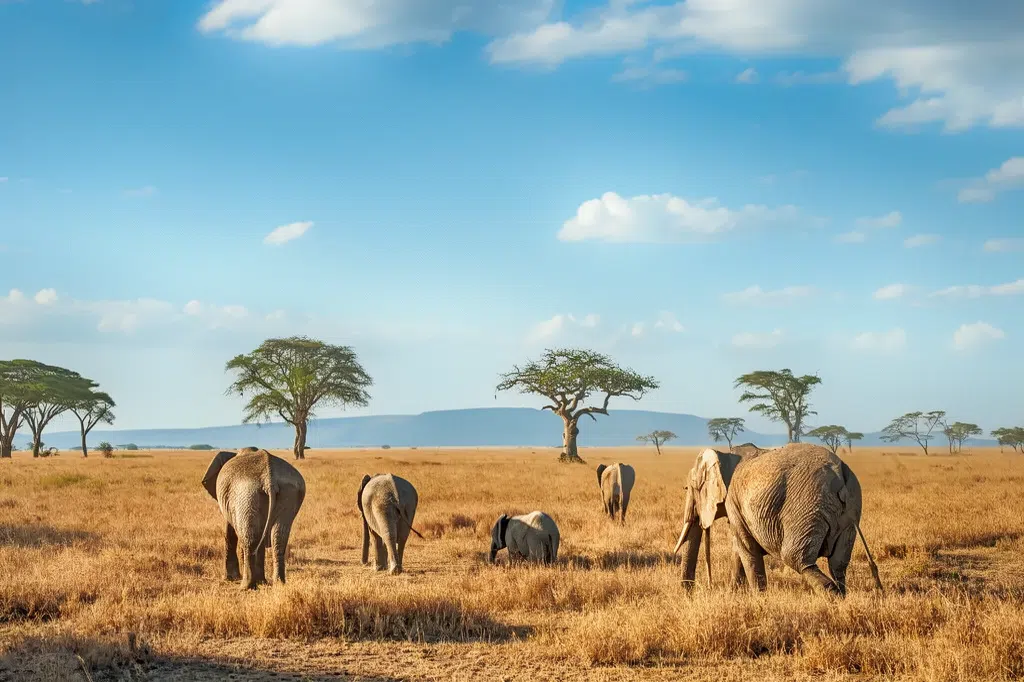
Serengeti Safari from Moshi with lions, cheetahs, wildebeest, zebras, Great Migration options, professional guide, 4x4 game drives, meals and accommodation.
Planning a Serengeti Safari from Moshi? Moshi is an excellent starting point for travellers who want to combine Mount Kilimanjaro with Tanzania's famous wildlife destinations.
Serengeti National Park is one of the most important safari destinations in Tanzania and is known for its vast landscapes, predators, resident wildlife and its role within the wider Great Migration ecosystem.
Because Serengeti involves considerably more road travel from Moshi than Tarangire, Lake Manyara or other closer safari areas, the number of days you choose has a major influence on the quality and pace of the trip.
A well-designed Serengeti safari from Moshi protects wildlife-viewing time rather than simply trying to reach the park, spend a few hours there and immediately return.
Moshi is best known as one of the principal bases for climbing Mount Kilimanjaro, but it also provides an excellent starting point for Northern Tanzania safari itineraries.
Travellers can finish a Kilimanjaro trek, recover in Moshi and continue directly toward Serengeti and other wildlife destinations.
The most important planning decision is choosing enough time for both road travel and wildlife viewing.
Three days can work for travellers with limited time, but the first and final days involve substantial road travel. Four or more days provide a much stronger balance.
| Duration | Typical Safari Style | Serengeti Time | Best For |
|---|---|---|---|
| 3 Days | Intensive Serengeti-focused road safari | Limited but worthwhile | Travellers with very limited time |
| 4 Days | Strong Serengeti-focused safari | Good | Short but meaningful wildlife safari |
| 5 Days | Serengeti plus Ngorongoro or Tarangire | Very good | Balanced Northern Circuit safari |
| 6 Days | Extended Serengeti and other parks | Excellent | Wildlife enthusiasts and photographers |
| 7 Days+ | Complete Northern Circuit or migration-focused safari | Extensive | First-time visitors, migration travellers and photographers |
A three-day Serengeti safari from Moshi is possible, but it should be understood as an intensive road itinerary.
A common approach is to travel toward Serengeti on day one, dedicate the strongest part of day two to wildlife and use day three for additional game viewing before returning toward Moshi.
For travellers who have an additional day available, four days generally provide a more comfortable road safari experience.
Four days create a stronger Serengeti-focused itinerary and allow more wildlife time than a three-day road safari.
This format keeps Serengeti as the clear focus rather than reducing wildlife time by attempting to include too many additional destinations.
Five days allow a more balanced route and can combine Serengeti with another important wildlife destination.
Ngorongoro is a particularly useful addition because it provides a very different ecosystem and an opportunity to search for black rhinoceros.
Six days provide excellent Serengeti time while allowing additional Northern Circuit parks to be included without making every day feel rushed.
A classic six-day route can combine Tarangire, Serengeti, Ngorongoro and Lake Manyara, with multiple Serengeti game-drive periods.
Seven days provide even more flexibility for predator searching, wildlife photography, migration-focused routing or a complete Northern Circuit experience.
For travellers whose primary goal is Serengeti wildlife, several nights can be spent inside or strategically near the most appropriate game-drive area.
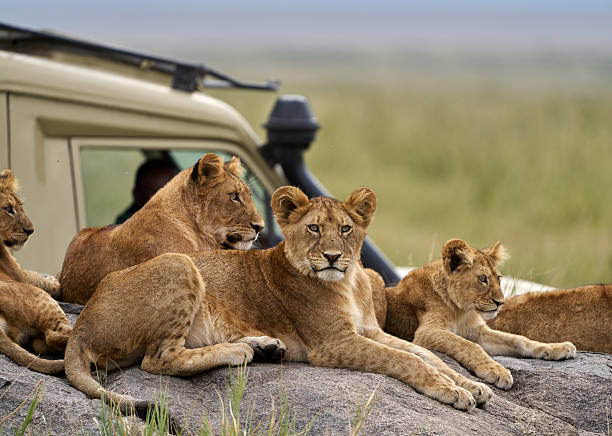
Lions are among the animals most strongly associated with a Serengeti safari.
They may be encountered resting in open grassland, around rocky kopjes, travelling through their territories or watching nearby herbivores.
Although Serengeti offers excellent opportunities to search for lions, individual sightings and hunting activity can never be guaranteed.
Cheetahs may be encountered in suitable open grassland habitats where their speed and eyesight provide advantages when hunting.
Travellers interested specifically in cheetahs should allow enough wildlife-viewing time rather than relying on one short game drive.
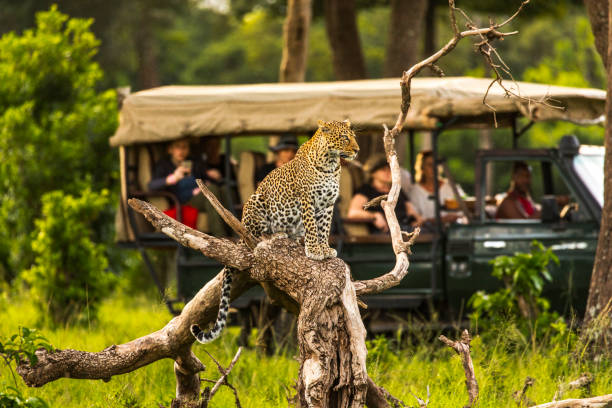
Leopards occur within the Serengeti ecosystem but are secretive and very well camouflaged.
Your guide may scan large trees, woodland and riverine vegetation where leopards can rest or move.
Wildebeest and zebras are major components of the Serengeti ecosystem.
Some groups may be encountered outside the largest migration concentrations, while much larger seasonal herds move through different areas during the annual Great Migration cycle.
Yes, a Great Migration-focused Serengeti safari can begin from Moshi.
The most important factor is not the starting town but selecting the appropriate Serengeti region for the traveller's dates.
The wildebeest migration moves naturally through the wider Serengeti ecosystem rather than remaining in one fixed location throughout the year.
Herd movement is influenced by: rainfall, water, grazing conditions and natural seasonal behaviour.
Cannot be guaranteed: exact herd locations, huge concentrations, calving events, predator hunts or river crossings.
The correct Serengeti area depends on the length of the safari, travel dates, wildlife priorities and seasonal conditions.
| Serengeti Region | Safari Character | Planning Consideration |
|---|---|---|
| Central Serengeti | Strong resident wildlife and predators | Often practical for shorter road safaris |
| Northern Serengeti | Seasonal migration and river landscapes | Requires careful seasonal and transport planning |
| Southern Ecosystem | Seasonal grassland and migration-related wildlife | Most valuable during relevant seasonal conditions |
| Western Serengeti | Woodland, rivers and seasonal wildlife movement | Selected according to season and itinerary length |
Central Serengeti can be one of the most practical areas for a shorter road safari because it supports varied resident wildlife and predator populations.
Travellers may search for lions, cheetahs, leopards, elephants, giraffes, buffaloes, zebras, wildebeest and other animals.
The exact area selected should still depend on accommodation availability, road conditions and current wildlife activity.
Northern Serengeti is farther from Moshi and should be planned carefully.
It can become particularly important during relevant migration periods, but travellers should allow enough days or consider suitable domestic flight arrangements when appropriate.
Possibly, during an appropriate migration period and in a relevant river area.
However, river crossings are completely natural and unpredictable.
Wildebeest may approach a river, wait for long periods, move to another crossing point or cross unexpectedly.
Better strategy: travel during a relevant seasonal period, select the appropriate area and allow several days for wildlife viewing instead of expecting one guaranteed event.
A successful Great Migration safari does not depend only on witnessing a river crossing.
Combining Serengeti with Ngorongoro is one of the most popular ways to add variety to a safari from Moshi.
Serengeti provides vast landscapes and predator searching, while Ngorongoro offers a very different resident wildlife environment within a dramatic volcanic setting.
Ngorongoro provides an opportunity to search for the endangered black rhinoceros.
Animals may be distant from safari roads, meaning binoculars can be especially useful.
Black rhinoceros sightings cannot be guaranteed.
A safari combining Serengeti with Ngorongoro and other Northern Circuit destinations provides opportunities to search for the traditional Big Five.
However, seeing all five species on one trip is never guaranteed.
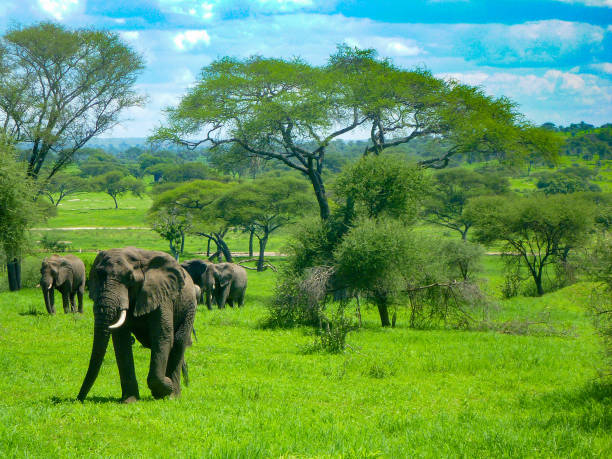
Tarangire adds giant baobab trees, elephants and a different dry-savanna environment to a Serengeti itinerary.
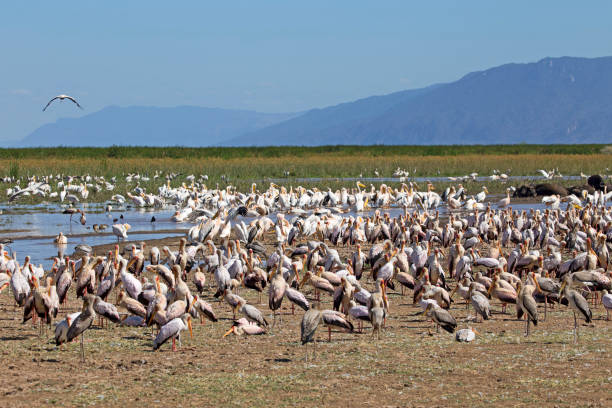
Lake Manyara can add forest, primates, elephants, birdlife and Great Rift Valley scenery to a longer Serengeti safari.
Flamingos may occur when ecological conditions are suitable, while tree-climbing lion behaviour is an unpredictable possibility rather than a guaranteed sighting.
A road safari is the traditional way to experience the Northern Circuit.
The journey allows travellers to observe changing landscapes and makes it practical to combine Serengeti with other wildlife destinations.
Domestic flights can sometimes reduce road travel, particularly when a traveller wants to visit a more distant Serengeti region or continue onward to another destination.
Flight schedules, airstrip selection, luggage restrictions, availability and pricing should be confirmed for the actual travel dates.
| Feature | Road Safari | Fly-In / Fly-Out |
|---|---|---|
| Road Travel | More | Reduced on selected sectors |
| Park Combination | Easy to combine multiple parks | Depends on flight routing |
| Cost | Generally more value-focused | Usually higher |
| Best For | Classic Northern Circuit safari | Travellers prioritizing time or distant regions |
A budget Serengeti safari can use camping, simple lodges or affordable tented accommodation.
A good budget safari should save money through accommodation style and, where appropriate, shared operating costs rather than compromising professional guiding, park access or basic vehicle safety.
A mid-range safari can use comfortable lodges and tented camps with private facilities according to route and availability.
This category is popular with travellers wanting a balance between wildlife positioning, comfort and overall safari cost.
A luxury Serengeti safari can use premium lodges, permanent tented camps or seasonal camps selected according to the intended wildlife area.
Domestic flight sectors can also be considered where they add practical value to the itinerary.
| Safari Category | Accommodation Style | Best For |
|---|---|---|
| Budget | Camping or simple accommodation | Value-focused travellers |
| Mid-Range | Comfortable lodge or tented camp | Comfort and value |
| Luxury | Premium safari lodge or camp | Premium comfort and service |
A private safari reserves the safari vehicle and professional guide for your own travelling party.
This format is particularly valuable for travellers who have strong wildlife priorities or want more photography flexibility.
Group joining may be available when other travellers have compatible dates, routes, accommodation categories and available vehicle spaces.
Shared safari departures are particularly attractive to solo travellers and visitors who want to distribute some transportation and guide costs.
| Feature | Private Safari | Group Joining Safari |
|---|---|---|
| Vehicle | Reserved for your booking | Shared with other travellers |
| Departure Date | More flexible | Depends on confirmed departure |
| Wildlife Stops | More personalized | Balanced among participants |
| Photography | Greater flexibility | Shared priorities |
| Accommodation Room | According to your booking | Sharing a vehicle does not automatically mean sharing a room |
A Serengeti safari is one of the most popular ways to continue a Tanzania trip after climbing Mount Kilimanjaro.
After descending the mountain, travellers can return to Moshi, enjoy a recovery night and then begin the safari.
A private Serengeti safari works especially well for couples because the vehicle and guide can be dedicated to their booking.
Accommodation can be selected according to preferred comfort and privacy.
A honeymoon safari can combine Serengeti wildlife with comfortable or premium tented camps.
Travellers can also continue to Zanzibar afterward for a safari-and-beach honeymoon.
Families can visit Serengeti from Moshi, particularly on a private safari.
Parents should consider children's ages and tolerance for longer road journeys when deciding how many days to book.
Children's exact ages should be provided when requesting accommodation and pricing.
Solo travellers can book a private safari or request an available group-joining departure.
Flexible dates can improve the possibility of matching a compatible confirmed safari.
Serengeti is one of Tanzania's strongest wildlife photography destinations.
Photographers benefit from allowing several game-drive days rather than compressing the safari into the shortest possible route.
Serengeti can provide rewarding wildlife experiences throughout the year.
The best period depends on whether your priority is general resident wildlife, green landscapes, migration herds, calving-related activity or seasonal river areas.
| Safari Interest | Possible Experience | Planning Note |
|---|---|---|
| General Wildlife | Predators and resident wildlife | Serengeti can be rewarding throughout the year |
| Green Landscapes | Green scenery, dramatic skies and birdlife | Road conditions can vary with rainfall |
| Migration Herds | Possible large wildebeest and zebra concentrations | Select Serengeti region according to realistic seasonal movement |
| River-Crossing Interest | Possible river activity during relevant migration stages | Crossings cannot be guaranteed |
If your itinerary allows the extra day, four days generally provide more meaningful Serengeti wildlife time and a less compressed road itinerary.
Three days remain useful when time is genuinely limited.
Four days work well for a Serengeti-focused trip.
Five days provide more flexibility to include Ngorongoro or another wildlife destination without sacrificing as much Serengeti time.
Five days provide a strong safari for travellers with moderate time.
Seven days are preferable for travellers who want multiple full Serengeti days, more photography flexibility or a broader Northern Circuit itinerary.
Yes. Moshi is a practical starting point for road and combined road-and-flight Serengeti safari itineraries.
A normal road day trip is not a practical way to experience Serengeti because of the substantial travel involved. Multi-day itineraries are much more suitable.
Three days can work as an intensive road safari, while four days or longer generally provide a better balance between travel and wildlife viewing.
Yes. Four days provide a strong short Serengeti-focused safari with more wildlife time than an intensive three-day itinerary.
Five days provide more flexibility and can combine Serengeti with Ngorongoro or another Northern Circuit destination.
Yes. A seven-day itinerary can include several Serengeti game drives plus Tarangire, Ngorongoro and Lake Manyara.
Serengeti provides excellent opportunities to search for lions, but sightings remain natural and cannot be guaranteed.
Cheetahs may be encountered in suitable open Serengeti habitats.
Yes, leopards occur in Serengeti, but they are secretive and can be difficult to locate.
Elephants may be encountered within Serengeti, while Tarangire can also be added when elephants are a major safari priority.
Wildebeest occur throughout the wider ecosystem, although the largest migration concentrations change location naturally.
Possibly, when your travel dates and selected Serengeti region correspond with natural herd movement.
The migration cycle occurs naturally, but exact herd locations, concentrations and behaviour cannot be guaranteed for specific dates.
Possibly during a relevant seasonal period, but river crossings are unpredictable and cannot be guaranteed.
The best region depends on your travel dates, safari length, wildlife priorities, seasonal conditions and accommodation availability.
Central Serengeti can provide excellent resident wildlife and predator opportunities and is often practical for shorter road safaris.
Yes, but longer road travel or suitable domestic flight arrangements should be considered because northern areas are considerably farther away.
Yes. Serengeti and Ngorongoro form one of the strongest wildlife combinations on Tanzania's Northern Circuit.
Ngorongoro provides an opportunity to search for black rhinoceros, although sightings may be distant and cannot be guaranteed.
A wider Northern Circuit safari provides opportunities to search for all traditional Big Five species, but seeing all five cannot be guaranteed.
Yes. Tarangire is an excellent addition for elephants, baobab trees and additional wildlife variety.
Yes. Lake Manyara can add primates, elephants, birdlife, forest habitats and Rift Valley scenery.
Yes. Camping, simple lodges and affordable tented accommodation can be used depending on the confirmed route.
Yes. Comfortable lodges and tented camps can be selected according to route and availability.
Yes. Premium safari camps, lodges and suitable domestic flight arrangements can be included according to availability and budget.
Yes. A private 4x4 vehicle and professional guide can be reserved for your own travelling party.
Group joining may be available when other travellers have compatible dates, routes and accommodation arrangements.
Not necessarily. Departures depend on compatible confirmed bookings and available vehicle spaces.
Not automatically. Group joining normally refers to sharing the safari vehicle; room arrangements depend on the confirmed accommodation booking.
Yes. Solo travellers can request an available compatible joining departure or book a private safari.
Yes. A Serengeti safari is an excellent extension after completing a Kilimanjaro climb in Moshi.
A recovery night in Moshi can make the transition from trekking to safari more comfortable.
Yes. Predators, large herbivore populations, kopjes and extensive landscapes make Serengeti excellent for wildlife photography.
Yes. Binoculars are strongly recommended for predators, birds and animals at greater distances.
Meals can be included according to the confirmed safari and accommodation package.
Check the final quotation. Applicable park and conservation arrangements can be included according to the confirmed package.
Suitable domestic flights may be possible depending on the selected airstrip, schedule, availability and onward destination.
Yes. Suitable domestic flight and transfer arrangements can be coordinated according to schedule and availability.
Yes. Safari duration, Serengeti region, additional parks, accommodation category, road or flight arrangements and private or group format can be adjusted where operationally practical.
A Serengeti Safari from Moshi gives travellers access to one of Tanzania's most famous wildlife ecosystems directly before or after a Kilimanjaro trip.
The Serengeti offers opportunities to search for lions, cheetahs, leopards, elephants, giraffes, buffaloes, wildebeest, zebras, hyenas and many other species across expansive landscapes.
Three days can work when time is limited, but four or more days provide a stronger balance between substantial road travel and meaningful wildlife viewing.
Longer itineraries can combine Serengeti with Ngorongoro, Tarangire and Lake Manyara or focus on a seasonally appropriate migration region.
Great Migration herds, river crossings, predator hunts and individual wildlife sightings remain natural and cannot be guaranteed, making realistic route planning especially important.
Whether you prefer a budget camping safari, comfortable mid-range lodge trip, luxury safari, private vehicle or available group departure, Serengeti can form the centerpiece of an unforgettable Tanzania wildlife journey from Moshi.
Plan Your Trip
Share your travel dates, number of travellers, preferred safari duration, accommodation category and wildlife priorities and our local team will prepare the most suitable Serengeti safari route from Moshi with professional guiding, practical accommodation and road or flight arrangements.
Start Your Enquiry
Discover flexible wildlife itineraries across Tanzania's most iconic safari destinations.
Explore Safaris
Enjoy flexible travel with a dedicated vehicle, professional guide and itinerary built around your interests.
View Private Safaris
Combine Tanzania's wildlife with carefully selected lodges, camps and personalized travel arrangements.
View Luxury SafarisUse this itinerary as a starting point and share your preferred dates, group size, destinations and comfort level. Our team can adjust the trip around your travel plans.
Continue exploring journeys that match this itinerary.